
Moving to Kawerau represents a strategic lifestyle shift for New Zealanders seeking financial freedom and outdoor access. Located in the heart of the Bay of Plenty, it offers some of the country’s most affordable housing, reliable fibre connectivity for remote work, and immediate access to geothermal amenities, lakes, and coastlines, making it an increasingly popular choice for digital nomads and young families.
Why Are Remote Workers Moving to Kawerau?
The landscape of the New Zealand property market has shifted dramatically in the last decade, forcing many to reconsider the viability of big-city living. Moving to Kawerau has transitioned from being a purely industrial-based decision to a lifestyle-led choice, particularly for the digital nomad sector and remote workforce.
Kawerau, situated centrally in the Bay of Plenty, is shedding its historical reputation solely as a “mill town” and re-emerging as a “lifestyle hub.” For remote workers, the equation is simple: high discretionary income combined with a low cost of living. By trading a hefty mortgage in Auckland or Wellington for a freehold property in Kawerau, professionals are finding they can reduce their working hours or increase their savings rate significantly.
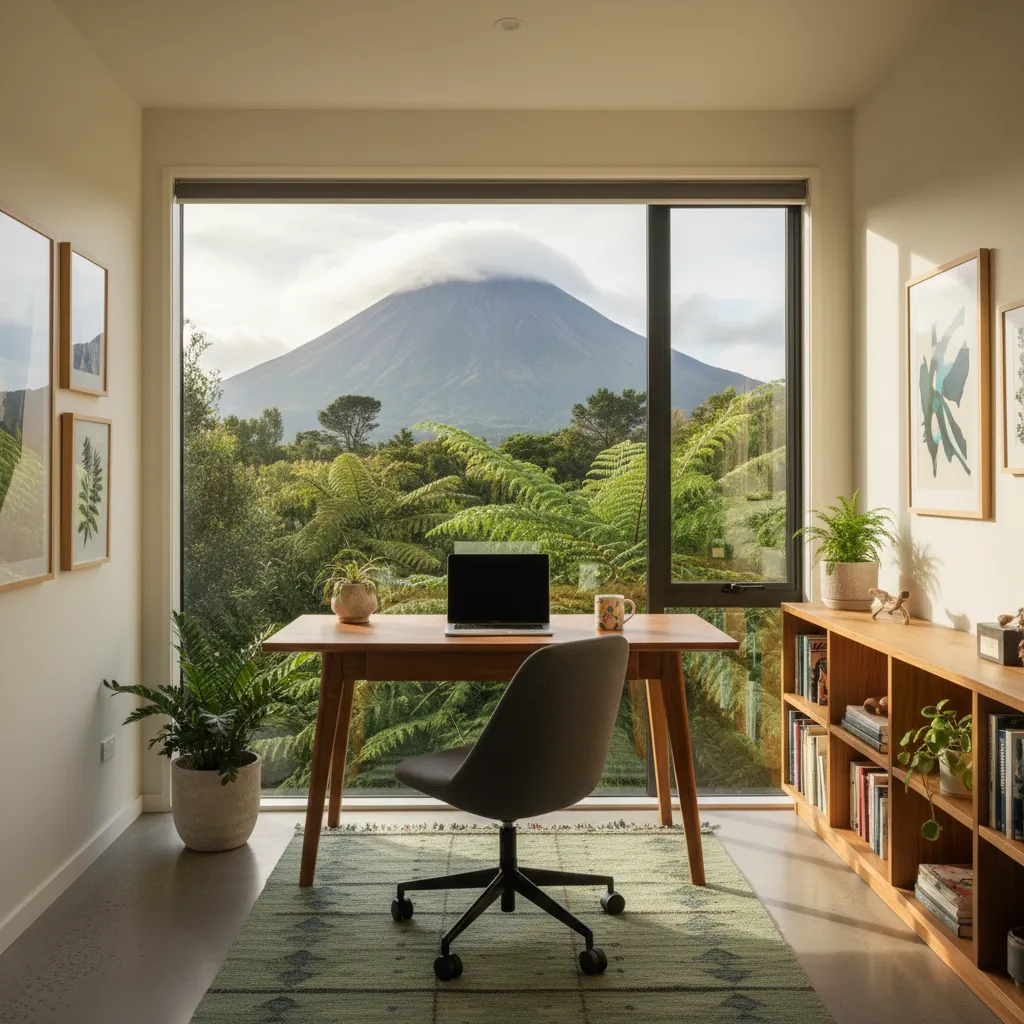
The town sits in a natural amphitheater dominated by the majestic Mount Putauaki. This creates a unique microclimate that is often warmer and less windy than the coastal Bay of Plenty. For those untethered from a physical office, the ability to finish work at 5:00 PM and be fishing in the Tarawera River or soaking in a hot pool by 5:15 PM is a compelling value proposition.
What Does the Housing Market Look Like in Kawerau?
The primary driver for moving to Kawerau remains the property market. Despite price increases across New Zealand, Kawerau consistently retains its title as one of the most affordable towns in the North Island. This affordability allows for a quality of life that is becoming extinct in larger urban centers. For short-term visits while house hunting, many find Budget Stays in Kawerau for Hikers & Bikers to be an excellent option.
Understanding the “Mill House” Stock
The majority of Kawerau’s housing stock was built in the 1950s and 60s to accommodate workers for the Tasman Pulp and Paper Mill. These are robustly built weatherboard homes, typically situated on generous quarter-acre sections (approx. 1000sqm).
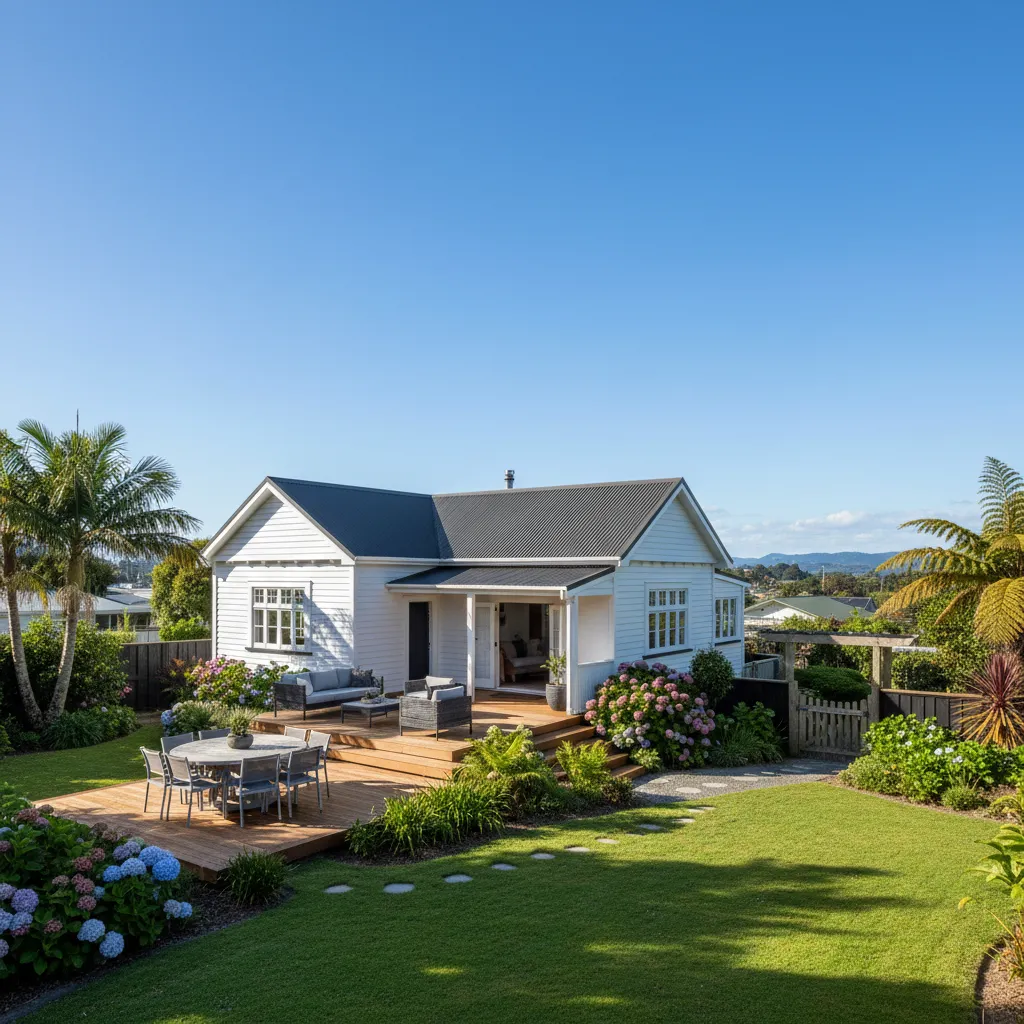
For buyers, this presents a significant opportunity. These homes are prime candidates for renovation. They often feature native timber flooring and solid bones. A renovated three-bedroom home in Kawerau can often be purchased for a fraction of the deposit required for a similar property in Tauranga, which is only an hour away.
New Developments and Retirement Living
In recent years, the market has diversified. New subdivisions and lifestyle villages, such as the Porritt Glade Lifestyle Village, have introduced modern, low-maintenance brick and tile homes. These cater to retirees and professionals who prefer turnkey solutions over DIY renovation projects. This shift indicates a growing confidence in the long-term capital growth of the region.
How Good is the Connectivity for Digital Nomads?
For anyone considering moving to Kawerau for remote work, internet infrastructure is non-negotiable. Fortunately, Kawerau punches above its weight regarding digital connectivity.
Ultrafast Broadband (UFB): The rollout of fibre across Kawerau is extensive. Most residential streets have access to high-speed fibre connections (up to 900/400 Mbps), which is identical to the service levels found in Auckland CBD. This reliability ensures that video conferencing, large file transfers, and cloud-based workflows are seamless.
Mobile Coverage: 4G coverage is robust throughout the township, supported by the flat topography. 5G rollout is progressively expanding in the wider Bay of Plenty region, ensuring future-proofing for mobile connectivity.
Co-working Spaces: While dedicated commercial co-working spaces are currently limited compared to cities, the local library and community hubs offer Wi-Fi services. However, the abundance of space in local homes usually allows residents to have dedicated home offices, negating the desperate need for third-party workspaces.
What Lifestyle and Amenities Does Kawerau Offer?
The lifestyle in Kawerau is defined by the outdoors and geothermal activity. It is not a place for high-end retail therapy or nightlife; rather, it is a sanctuary for those who value nature and wellness.
The Geothermal Advantage
Kawerau sits on an active geothermal field. This provides the town with a unique asset: free or low-cost heat. The Maurie Kjar Memorial Swimming Pool complex is a community jewel, heated geothermally and free for users. This facility creates a social hub for families and fitness enthusiasts year-round.
Outdoor Recreation
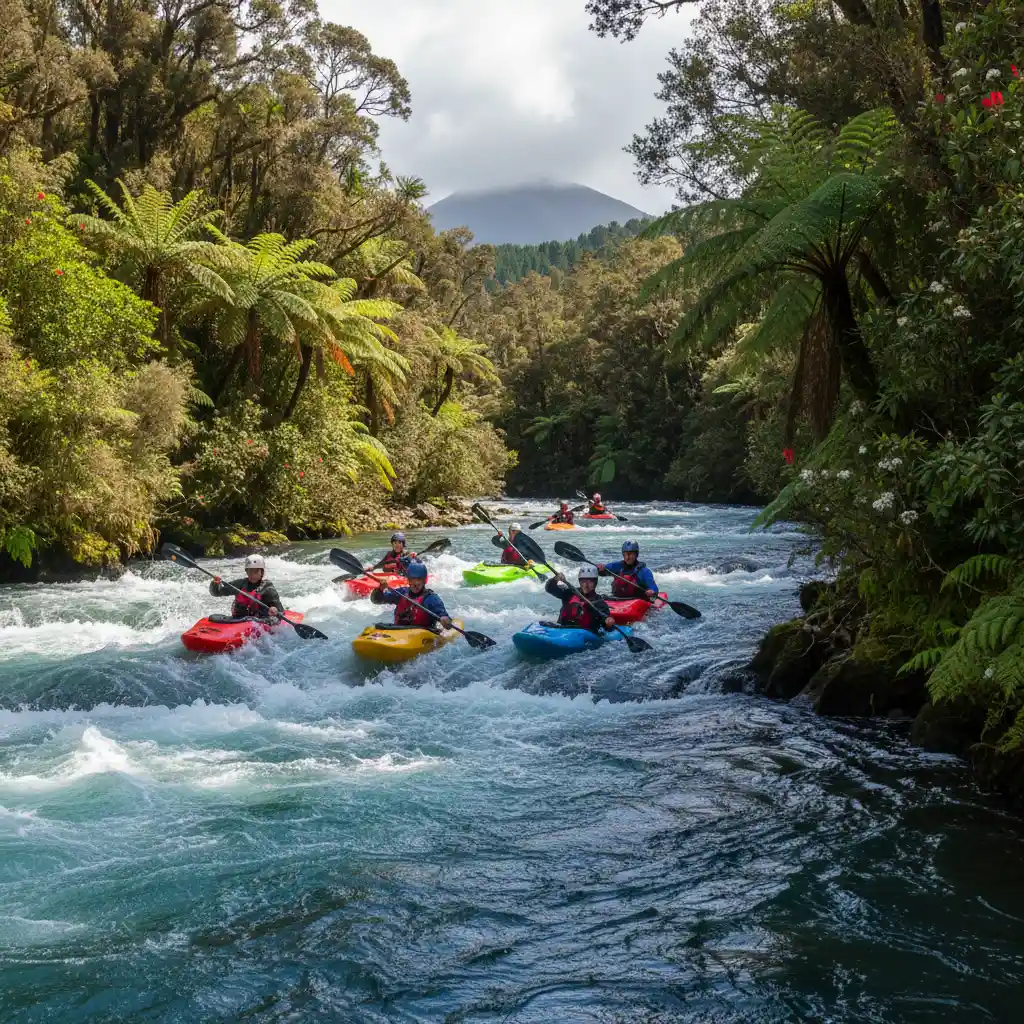
The Tarawera River runs directly through the town. It is a venue for world-class kayaking and slalom canoeing. For quieter pursuits, the river offers excellent trout fishing. The surrounding forests provide ample opportunities for hunting (permit required) and hiking. For transport to trailheads, Kawerau Shuttle Services for Hikers & Bikers offer reliable local support.
Furthermore, Kawerau is arguably the “Gateway to the Lakes.” Lake Tarawera, Lake Rotomā, and Lake Rotoiti are all within a short drive, offering boating and water sports without the premium price tag of lakefront property.
What is the Community Vibe and Demographics?
Understanding the social fabric is crucial before moving to Kawerau. The town has a strong, proud working-class history and a deep connection to Māori culture.
Cultural Heritage
Kawerau has a high Māori population, and the culture is woven into the daily life of the town. There is a strong sense of whanaungatanga (kinship/connection). Newcomers who approach the community with respect and an open mind are generally welcomed warmly. Engaging with local marae and staying updated via Local News & Community Notices Kawerau is the best way to integrate.
Demographic Shift
Historically, the demographics skewed towards mill workers and their families. However, the low cost of housing has attracted two distinct new groups: young families looking to get on the property ladder and active retirees cashing out of expensive cities. This mix is slowly changing the face of the town, bringing new energy and diversity to local clubs and schools.
Safety and Perception
Like many industrial towns undergoing transition, Kawerau has battled negative perceptions regarding crime. While there are pockets of socio-economic deprivation, long-term residents argue that the reputation is outdated. The community is tight-knit, and neighbors tend to look out for one another. As with any move, visiting the town and walking the streets at different times of the day is recommended to get a true feel for specific neighborhoods.
How Are the Education and Healthcare Services?
For families moving to Kawerau, essential services are readily available, though specialist care requires travel.
Schools
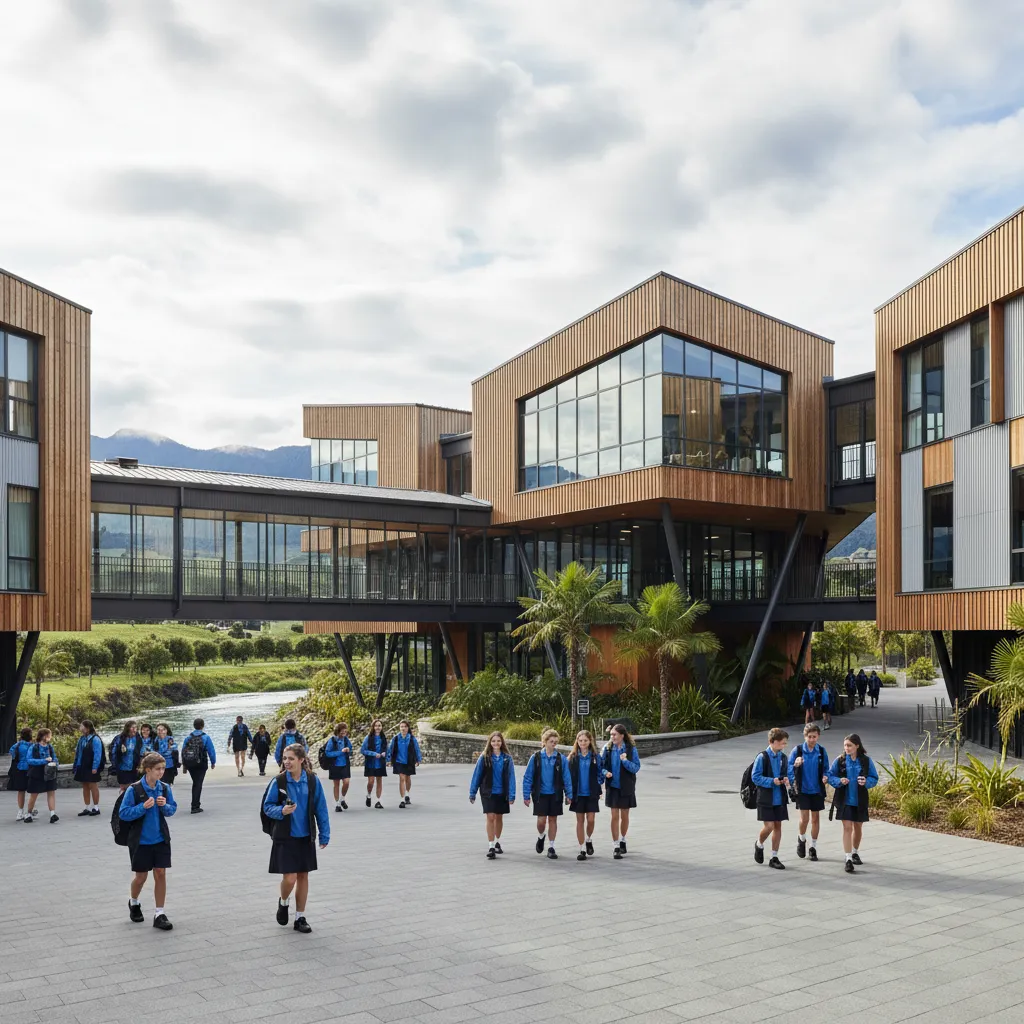
Kawerau is serviced by several primary schools and a secondary school, Tarawera High School. Tarawera High School recently underwent a multi-million dollar rebuild, providing modern, state-of-the-art learning environments. There is also a Kura Kaupapa Māori for those seeking Māori-medium education.
Healthcare
Primary healthcare is handled by the Kawerau Medical Centre, which provides GP services, nursing, and visiting specialists. For hospital-level care, Whakatāne Hospital is approximately a 30-minute drive, while the larger Tauranga Hospital is about an hour away. This proximity to major health hubs makes it a viable option for retirees with ongoing health needs.
Logistics: Commuting and Regional Access
Kawerau’s location is one of its strongest commercial selling points. It serves as a central pivot point for the Bay of Plenty.
- Whakatāne: 30 minutes (Beaches, Shopping, Hospital)
- Rotorua: 45 minutes (Tourism, Mountain Biking, Lakes). For more on the trip between cities, see Driving from Rotorua to Kawerau: Route & Safety.
- Tauranga: 60-75 minutes (City amenities, Port, Airport)
- Taupō: 60 minutes (Lake Taupō, Ski fields access)
This centrality means residents can enjoy a quiet, low-cost home base while having access to the employment markets and amenities of three major regional centers within an hour’s drive. For a digital nomad who may need to fly occasionally, Rotorua Airport is the closest link to domestic flights.
Frequently Asked Questions
Is Kawerau a safe place to live?
Kawerau is generally safe with a strong community spirit where neighbors look out for each other. Like many towns, it has areas of lower socio-economic status, but crime rates are comparable to similar-sized regional towns. The perception of safety has improved significantly with the influx of new families and retirees.
What is the average house price in Kawerau?
As of late 2023 and early 2024, the median house price in Kawerau sits between $400,000 and $500,000 NZD. This is significantly lower than the national average and the neighboring Bay of Plenty towns like Whakatāne or Tauranga, making it an attractive entry point for first-home buyers.
How far is Kawerau from the beach?
Kawerau is approximately a 30-minute drive from the coast. The nearest popular beach is Ohope Beach near Whakatāne, which is frequently voted New Zealand’s best beach. Thornton Beach is also nearby and popular for fishing.
Does Kawerau have fibre internet?
Yes, Kawerau has excellent digital infrastructure. Ultra-Fast Broadband (UFB) fibre is available to the vast majority of households, supporting speeds up to roughly 900Mbps, making it ideal for remote workers and digital nomads.
What is Kawerau famous for?
Kawerau is famous for its pulp and paper industry, its high level of geothermal activity, and Mount Putauaki. It is also well-known for the Tarawera River, which hosts national and international white-water kayaking and slalom events.
Is there a hospital in Kawerau?
There is no public hospital in Kawerau itself. The town is serviced by the Kawerau Medical Centre for GP and primary care. The nearest public hospital with emergency services is Whakatāne Hospital, which is a 30-minute drive away.