
Kawerau Māori history is defined by the enduring legacy of Ngāti Tūwharetoa (Bay of Plenty), the tangata whenua who have occupied the region for centuries. It encompasses the spiritual authority of Pūtauaki (Mt Edgecumbe), the life-sustaining resources of the Tarawera River, and the innovative use of geothermal energy, evolving from ancient settlements to a modern industrial partnership.
The history of Kawerau is a tapestry woven from the threads of ancient migration, geothermal power, and industrial transformation. Located in the heart of the Bay of Plenty, this region is far more than a timber town; it is a landscape rich in cultural narrative, dominated by the presence of the sacred maunga, Pūtauaki, and the flowing waters of Te Awa o Te Atua (the Tarawera River). Understanding Kawerau requires a deep dive into the whakapapa (genealogy) of its people and their resilience through eras of colonization and industrialization.
Who are the Tangata Whenua of Kawerau?
To understand the history of Kawerau, one must first acknowledge the mana whenua (territorial authority) of Ngāti Tūwharetoa (Bay of Plenty). While sharing a common ancestor with the Tūwharetoa people of the Taupō region, the Kawerau branch has a distinct history, identity, and settlement pattern that is unique to the Eastern Bay of Plenty.
The Migration of Tūwharetoa
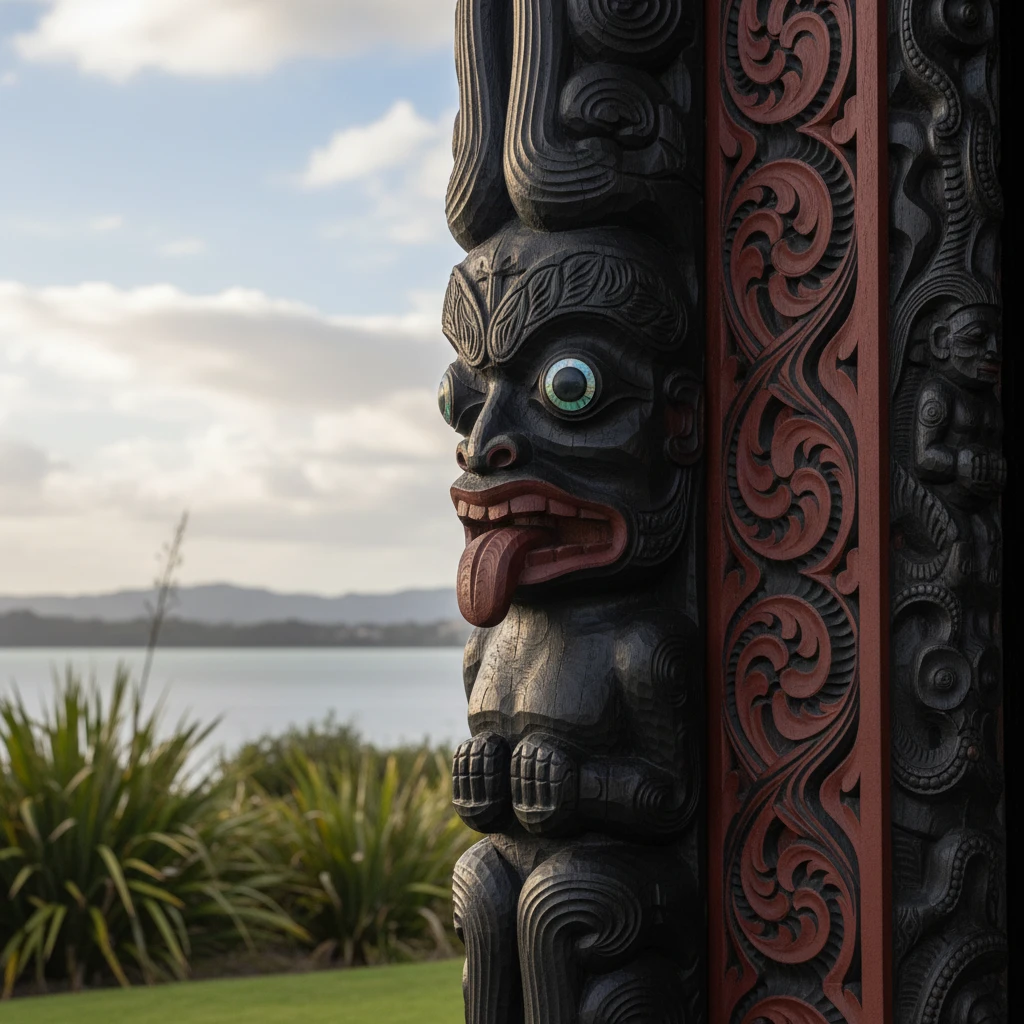
The origins of the local iwi trace back to the eponymous ancestor Tūwharetoa. Historical accounts and oral traditions describe how the sons of Tūwharetoa moved from the Taupō region towards the coast. This migration was not merely a movement of people but an establishment of mana over the land. The rich geothermal resources and fertile soils surrounding Pūtauaki made the area a highly desirable location for settlement.
The hapū (sub-tribes) of Ngāti Tūwharetoa ki Kawerau established numerous pā (fortified villages) and kainga (unfortified villages) throughout the valley. These early settlements were strategically located to take advantage of the geothermal warmth for cooking and heating, as well as the defensive capabilities of the terrain.
Relationship with Neighboring Iwi
The history of the region is also characterized by the complex inter-relationships between Ngāti Tūwharetoa and neighboring iwi, including Ngāti Awa to the north and Tūhoe to the south and east. These relationships fluctuated between alliances formed through marriage and conflicts over resources and boundaries. Today, these historical ties form the basis of the intricate social fabric of the Eastern Bay of Plenty, where whakapapa lines often cross iwi boundaries.
What is the Significance of Pūtauaki (Mt Edgecumbe)?
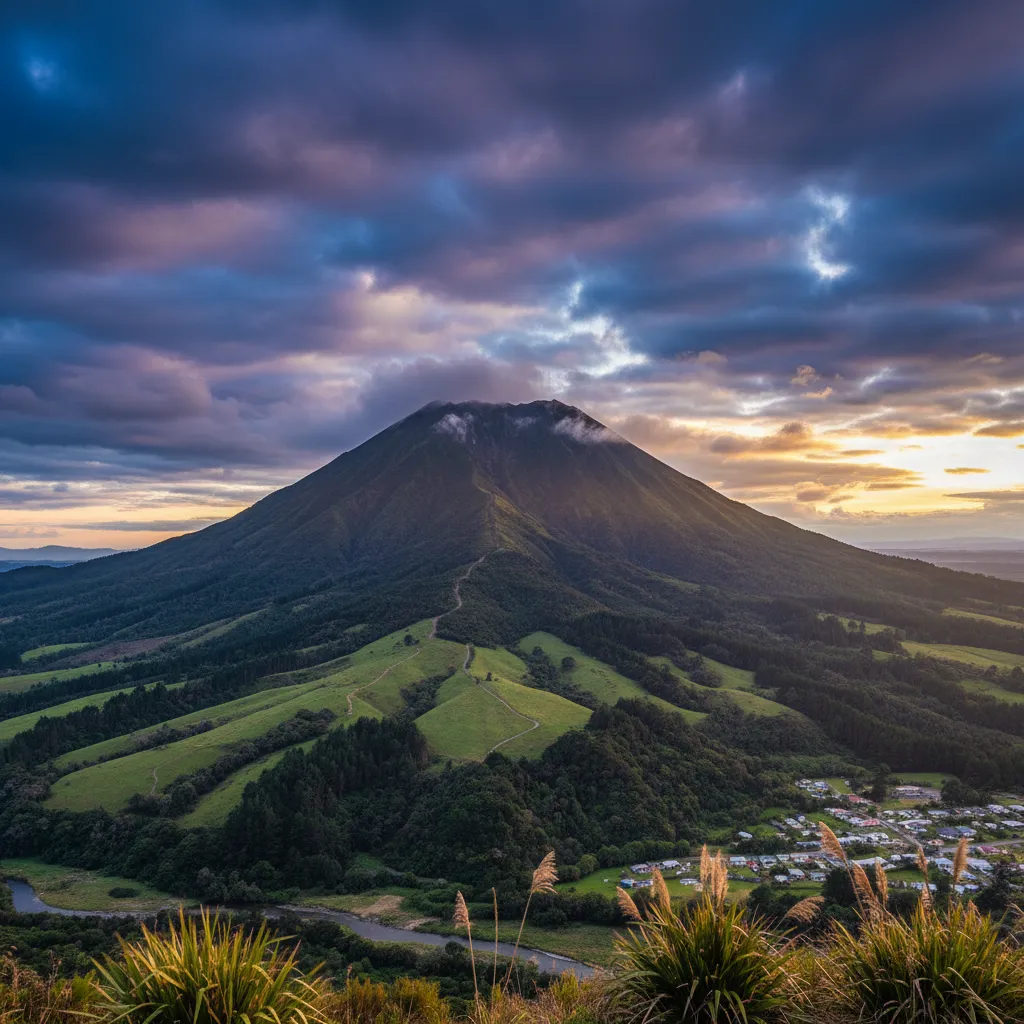
Dominating the skyline of Kawerau is the majestic volcanic cone of Pūtauaki. For the Māori people of Kawerau, Pūtauaki is not just a mountain; he is an ancestor, a guardian, and the focal point of tribal identity.
The Legend of the Lonely Mountain
According to local pūrākau (legends), Pūtauaki once resided in the central plateau alongside the other great mountains: Tongariro, Ngāuruhoe, and Ruapehu. All the mountains battled for the love of the beautiful Pīhanga. Tongariro emerged victorious, and the defeated mountains were forced to depart. Pūtauaki traveled north, guided by his desire to reach the sea. However, he was caught by the rising sun before he could reach the ocean and was fixed in his current location, forever guarding the inland pathway to the coast.
Spiritual and Practical Importance
Historically, the slopes of Pūtauaki were used for burial caves, making the mountain strictly tapu (sacred). It was also a source of food; the forests on its lower slopes were rich in birdlife, and the fertile volcanic soils at its base were cultivated for kūmara. The connection between the people and the mountain is summarized in the tribal pepeha (introduction): “Ko Pūtauaki te maunga, Ko Tarawera te awa, Ko Tūwharetoa te iwi” (Pūtauaki is the mountain, Tarawera is the river, Tūwharetoa is the tribe).
How has the Tarawera River Shaped Local History?
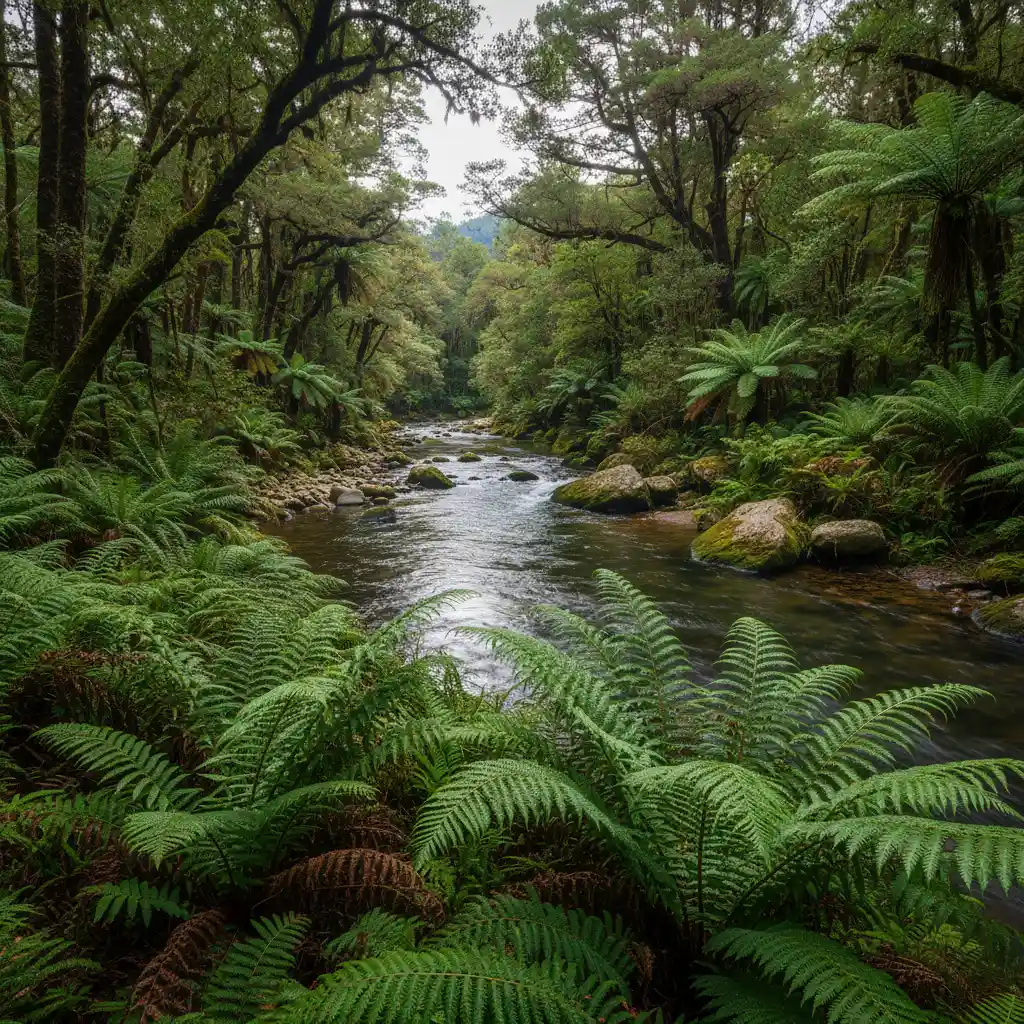
The Tarawera River, historically known as Te Awa o Te Atua (The River of the God), flows from Lake Tarawera through the Kawerau township to the sea at Matatā. It has been the lifeblood of the region for centuries, serving as a highway for transport and a food basket for the people.
Traditional Resources: Tuna and Koura
Before industrialization, the river was renowned for its abundance of tuna (eels), koura (freshwater crayfish), and inanga (whitebait). Seasonal harvesting of these resources was governed by strict tikanga (customary practices) to ensure sustainability. The river also provided fresh water and was a central component of ceremonial cleansing rituals.
The Impact of Geothermal Features
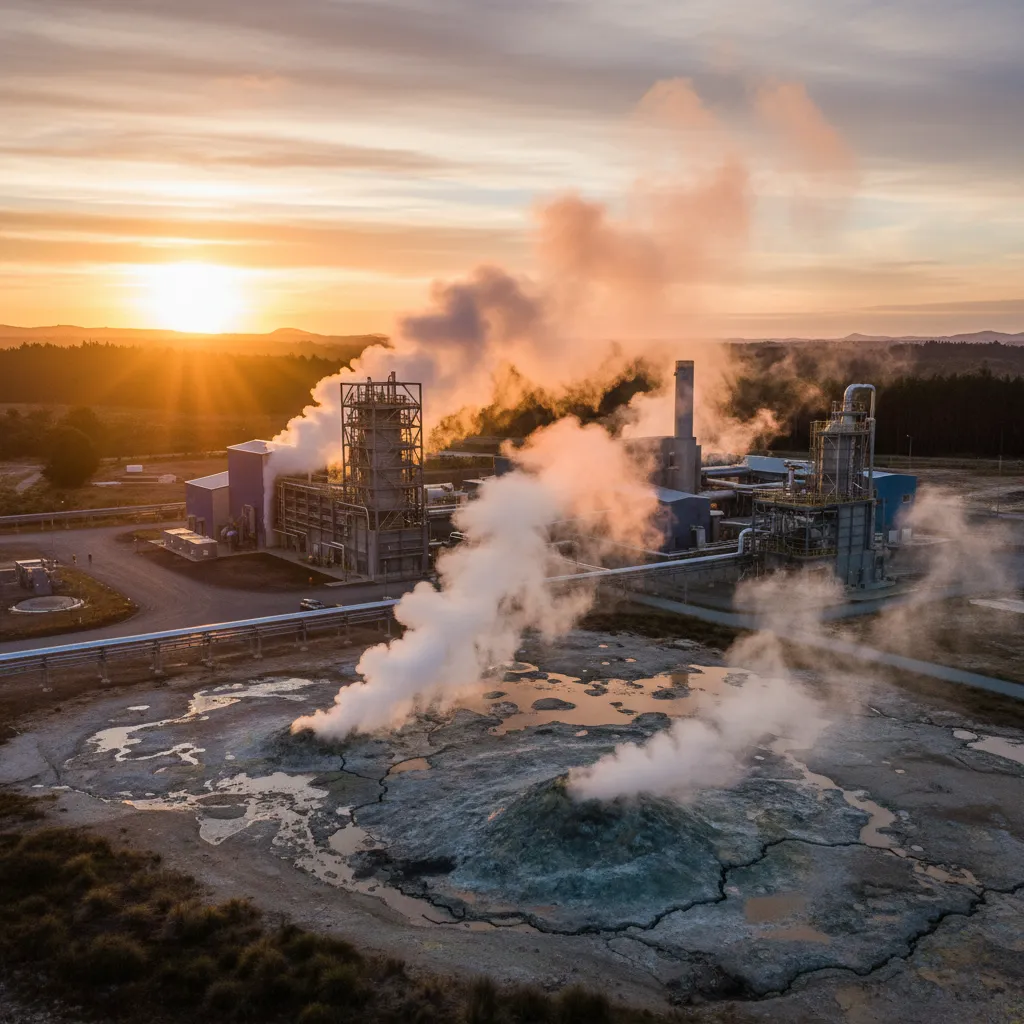
The section of the river passing through Kawerau is unique due to the geothermal activity along its banks. Hot springs and steam vents were utilized by early Māori for cooking food (ngāwhā) and for therapeutic bathing. This natural energy source, which would later attract heavy industry, was first mastered by the tangata whenua who understood the rhythms and dangers of the geothermal field.
Preserving Tikanga in a Modern Industrial Town
The establishment of the Tasman Pulp and Paper Mill in the 1950s marked a seismic shift in Kawerau’s history. The town was purpose-built to service the mill, leading to an influx of workers from across New Zealand and the world. This industrialization brought economic prosperity but also challenged the traditional way of life and the environment.
The “Mill Town” Culture and Māori Adaptation
Kawerau became a melting pot of cultures. For Māori, this meant a transition from rural, agrarian living to an urban, industrial workforce. However, tikanga Māori did not disappear; it adapted. The workforce at the mill was heavily Māori, and the values of whanaungatanga (kinship) and manaakitanga (hospitality) permeated the workplace culture.
Rautahi Marae: A Pan-Tribal Hub
A unique feature of Kawerau’s history is the establishment of Rautahi Marae. Unlike traditional marae which belong to a specific hapū or whānau, Rautahi was established as a community marae to serve the diverse Māori population drawn to the town for work. It became a place where Māori from different iwi—Ngāpuhi, Tainui, Ngāti Porou, and others—could gather, practice their culture, and hold tangihanga (funerals) while living away from their ancestral homelands. This marae stands as a testament to the resilience of Māori culture within a modern industrial context.
Environmental Stewardship and Kaitiakitanga
The industrial use of the river and geothermal field initially caused significant environmental degradation. However, in recent decades, the concept of kaitiakitanga (guardianship) has returned to the forefront. Ngāti Tūwharetoa (Bay of Plenty) Settlement Trust has played a crucial role in negotiating better environmental standards and gaining ownership of geothermal assets. Today, the iwi is a key partner in the industrial landscape, ensuring that economic development aligns with cultural values.
Important Māori Landmarks and Sacred Sites
Beyond the mountain and the river, the Kawerau landscape is dotted with sites of immense historical and spiritual value. Recognizing these sites is essential for anyone wishing to understand the depth of Kawerau Māori history.
Waitahanui Pā
Located near the Tarawera River, Waitahanui was a significant fortified pā. Archaeological evidence suggests it was a major settlement, utilizing the river for defense and transport. Today, the site is protected, serving as a physical reminder of the strategic prowess of the ancestors.
Monika Lanham Reserve
This reserve, situated in the heart of the town, holds cultural significance and offers walking tracks that provide views of the town and the mill. It serves as a green connector between the urban environment and the native bush that once covered the valley.
Parimahana
Deep within the Tarawera forest lie the remnants of Parimahana, an ancient settlement associated with the early history of Ngāti Tūwharetoa. Access to such sites is often restricted to protect their integrity, highlighting the importance of respecting wāhi tapu (sacred places).
The Future of Māori Heritage in Kawerau
As Kawerau looks to the future, Māori history is not just a relic of the past but a driver of growth. The settlement of Treaty of Waitangi claims has empowered Ngāti Tūwharetoa (Bay of Plenty) with resources and assets, particularly in the geothermal, forestry, and dairy sectors.
Iwi-Led Economic Development
The iwi is now a major economic force in the region. By investing in geothermal power plants and sustainable land use, they are creating a future where economic independence supports cultural revitalization. This modern chapter of Kawerau Māori history is defined by autonomy and the reclaiming of the narrative.
Cultural Tourism
There is a growing interest in sharing the stories of Kawerau with the world. Cultural tourism initiatives, guided walks up Pūtauaki (with permission), and educational programs about the geothermal field offer opportunities to educate visitors while preserving the mana of the stories.
In conclusion, Kawerau Māori history is a powerful saga of a people intimately connected to their environment. From the arrival of Tūwharetoa’s descendants to the steam-driven industry of today, the heartbeat of Kawerau remains strong, driven by the tangata whenua who continue to hold fast to their land, their river, and their mountain.
Which iwi is the tangata whenua of Kawerau?
Ngāti Tūwharetoa (Bay of Plenty) is the primary iwi and tangata whenua of the Kawerau region. They share ancestry with the Tūwharetoa of Taupō but are a distinct legal and political entity with their own history in the Eastern Bay of Plenty.
What does Pūtauaki mean?
The name Pūtauaki is often associated with the concept of “mounting” or “rising up.” It is the Māori name for Mount Edgecumbe. The mountain is considered a male ancestor who stands lonely in the Bay of Plenty after losing a battle for love against Mount Tongariro.
What is the traditional name for the Tarawera River?
The traditional name for the Tarawera River is Te Awa o Te Atua, which translates to “The River of the God.” It was a vital source of food and transport for early Māori settlements in the area.
How did the paper mill affect local Māori culture?
The Tasman Pulp and Paper Mill brought urbanization and a shift from rural living to industrial employment. While it challenged traditional lifestyles, it also led to the creation of a strong community identity and the establishment of Rautahi Marae to support workers from various tribes.
Can you climb Mount Pūtauaki?
Access to Mount Pūtauaki is restricted because it is a sacred site (wāhi tapu) and privately owned Māori land. However, the iwi occasionally grants permission for organized events or cultural purposes. It is respectful to check with the Māori Lands Trust before attempting to enter.
Are there marae in Kawerau township?
Yes, the most prominent marae within the township is Rautahi Marae. It is a pan-tribal marae established to serve the diverse Māori community working at the mill. There are also traditional marae belonging to Ngāti Tūwharetoa located in the surrounding areas.