A kayak slalom course in NZ refers to specialized whitewater venues, most notably the Vector Wero Whitewater Park, designed for technical paddling training and competition. These facilities utilize artificial or modified natural riverbeds with hanging gates to create controlled, high-intensity rapids, allowing athletes and recreational paddlers to refine precision maneuvers in a safe, regulated environment.
The Rise of the Purpose-Built Slalom Course
New Zealand has long been regarded as a mecca for whitewater enthusiasts, boasting some of the most spectacular natural river runs in the world. However, the evolution of Canoe Slalom as an Olympic discipline and the growing demand for safe, accessible urban adventures have driven the development of purpose-built kayak slalom courses. Unlike natural rivers, which rely on rainfall and seasonal flows, a purpose-built kayak slalom course NZ facility offers guaranteed water levels, engineered hydraulic features, and a controlled environment for skill development.
The primary function of these courses is to simulate the unpredictability of a wild river while maintaining a predictable infrastructure. This allows for the precise placement of slalom gates—green for downstream and red for upstream—which are essential for the sport. For the domestic tourism market, these facilities bridge the gap between extreme adventure and accessible recreation, allowing city dwellers to experience Grade 3 and 4 whitewater without leaving the metropolitan boundary.
Vector Wero: New Zealand’s Premier Facility
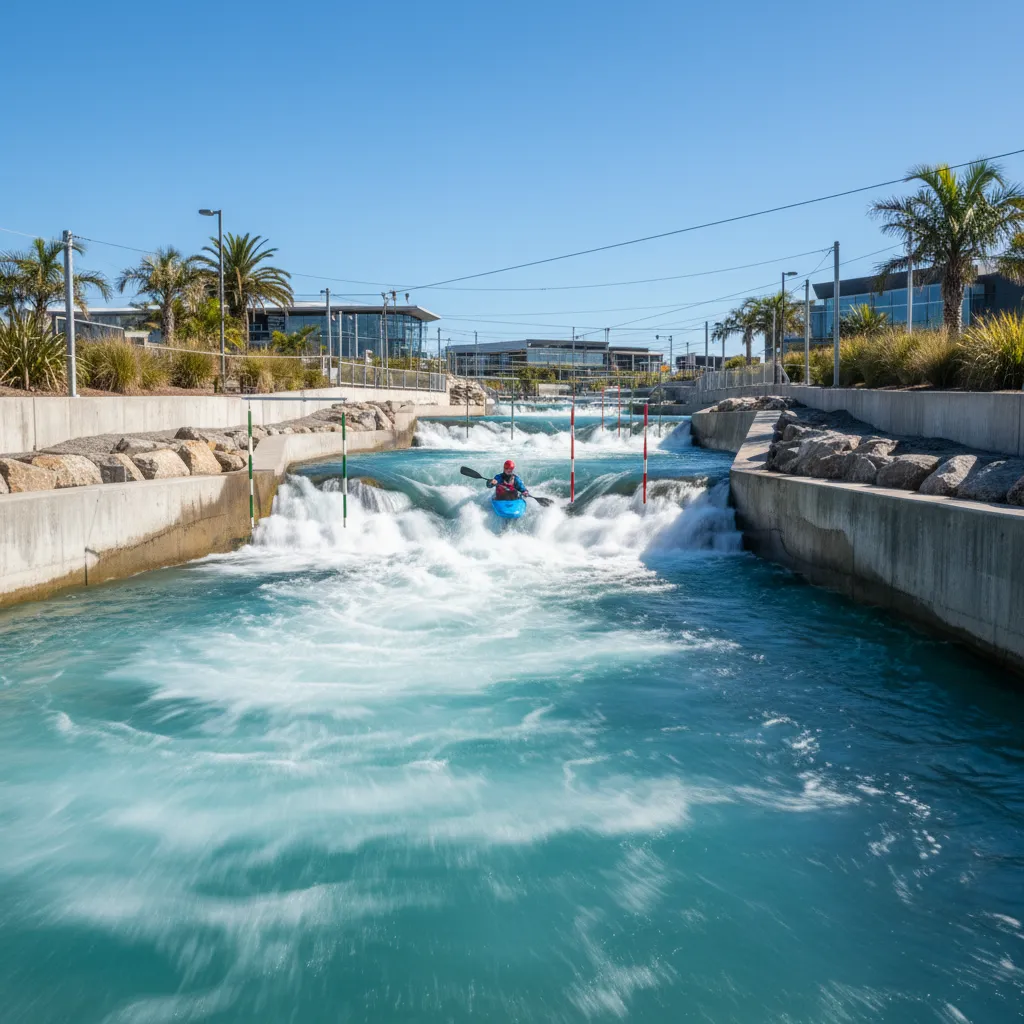
When discussing the pinnacle of artificial courses in the Southern Hemisphere, the conversation begins and ends with the Vector Wero Whitewater Park in Auckland. Located in Manukau, this facility is a world-class example of hydraulic engineering and the centerpiece of New Zealand’s slalom community.
The Tamariki and River Rush Courses
Vector Wero is divided into two distinct courses, catering to different skill levels. The Tamariki River is a Grade 2 recreational course, ideal for beginners and those learning the fundamentals of moving water. It features gentle eddies and straightforward wave trains.
Conversely, the River Rush course is a Grade 3-4 adrenaline machine. It is designed to challenge intermediate to advanced paddlers. The course includes a massive pump-driven flow that creates powerful stoppers, sharp eddy lines, and a 4.5-meter waterfall drop. For slalom athletes, the River Rush course provides a consistent training ground where moves can be repeated ad infinitum—a luxury not often afforded by natural rivers where shuttling vehicles takes up half the day.
Access for Recreational Kayakers
One of the most common misconceptions about artificial slalom courses is that they are open to anyone with a kayak. In reality, strict safety protocols govern access to ensure the wellbeing of all users. Because the water is pump-driven and the concrete channels are unforgiving, competence is non-negotiable.
The Accreditation Process
To paddle the River Rush course independently, kayakers must undergo a rigorous accreditation assessment. This is not merely a formality; it is a practical exam conducted by qualified safety staff. The assessment typically requires the paddler to demonstrate:
- A reliable roll: You must be able to roll your kayak upright in turbulent water on both sides.
- Self-rescue skills: The ability to exit the boat and swim safely to the bank with gear.
- Ferry gliding and eddy hopping: Demonstrating control while crossing the current and catching eddies.
For those who do not yet possess these skills, the facility offers instruction and coaching. This tiered access system ensures that the course remains safe and that users do not overestimate their abilities in a high-consequence environment.
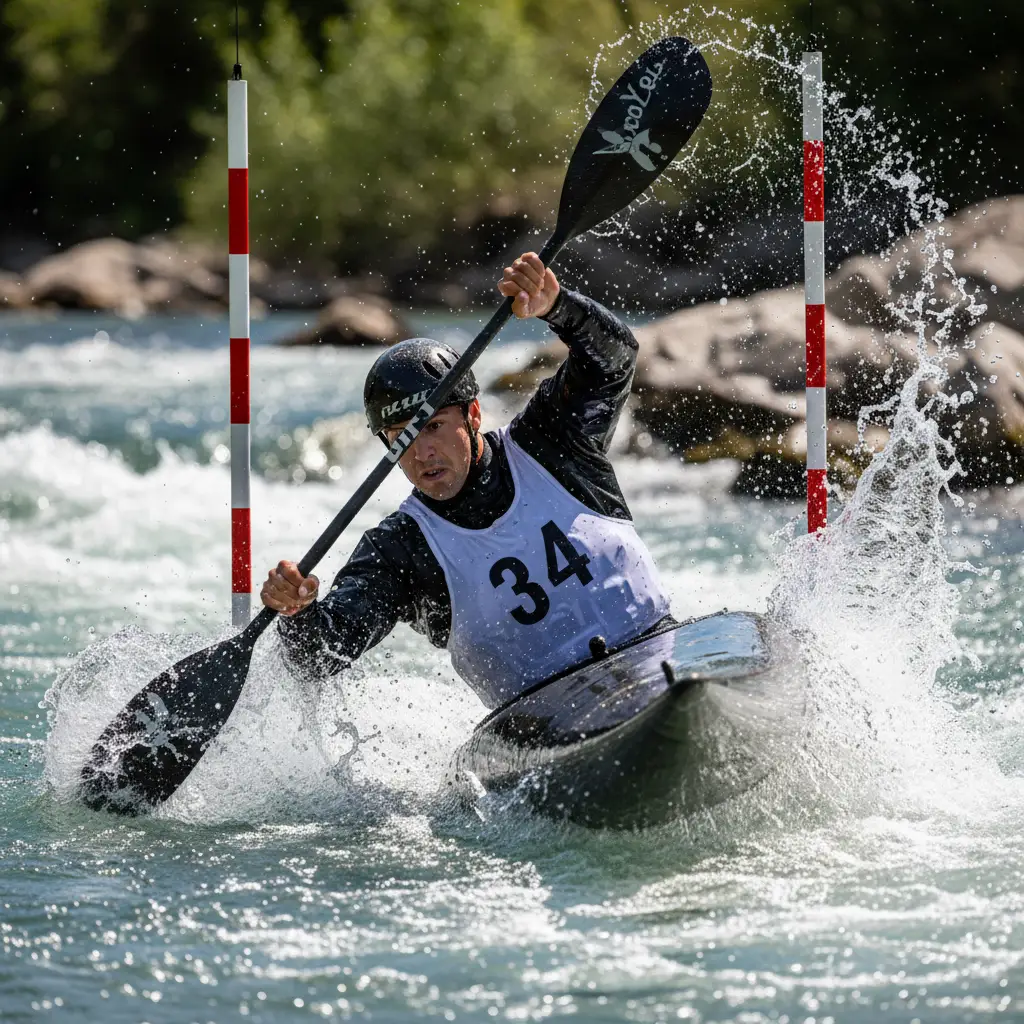
Safety Gear and Equipment Standards
Paddling a kayak slalom course NZ requires specific equipment that meets international safety standards. The nature of an artificial course—often shallower than natural rivers and lined with concrete obstacles—dictates the gear choices.
Mandatory Personal Protective Equipment (PPE)
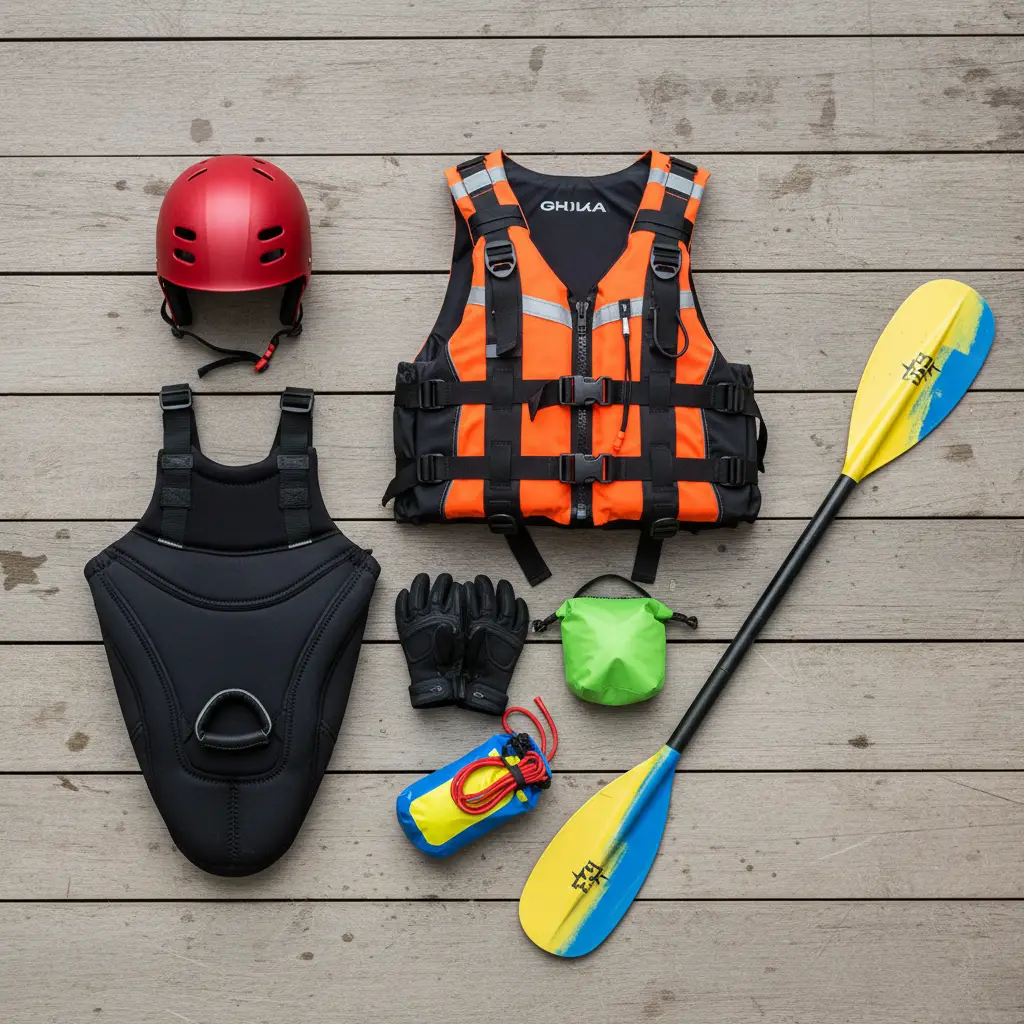
Helmets: A standard bicycle helmet is insufficient. Paddlers must wear a specific water sports helmet that covers the forehead, temples, and back of the head. It must be EN 1385 certified. Given the proximity to concrete blocks used to shape the rapids, a full-face helmet is often recommended for those pushing their limits.
Personal Flotation Devices (PFDs): A Type 406 specialist PFD is mandatory. It must fit snugly to prevent riding up during a swim. For slalom specifically, low-profile PFDs are preferred to allow for maximum range of motion around the torso, enabling the paddler to reach through the gates without restriction.
Boat Specifications
While plastic creek boats are permitted and often used for general training, the true slalom experience requires a composite boat (carbon/Kevlar). These boats are significantly lighter, faster, and more responsive than plastic kayaks. However, they are also more fragile. Using a composite boat on a concrete course requires precision; hitting the bottom or the walls can result in expensive repairs. Consequently, many recreational users at Vector Wero stick to plastic “half-slice” kayaks which offer high performance without the fragility.
Hosting National Competitions
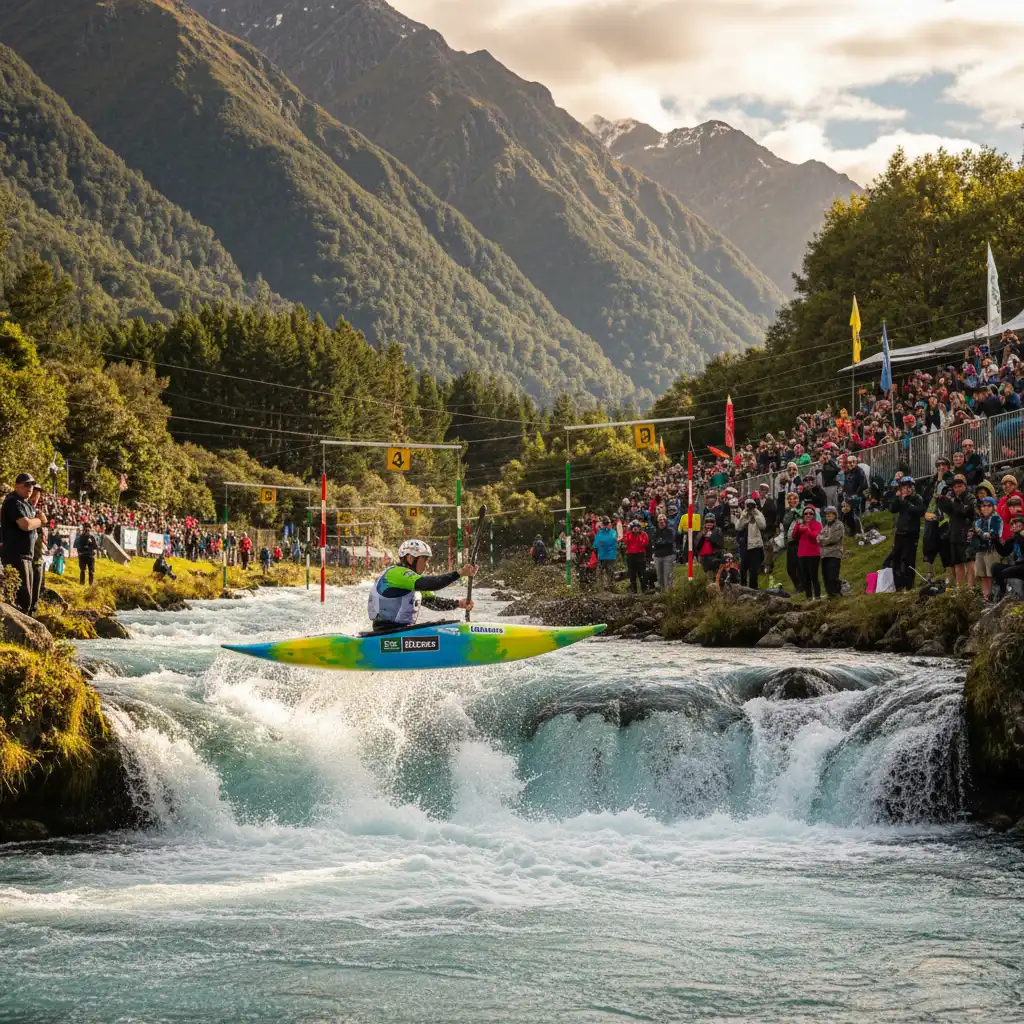
The existence of facilities like Vector Wero and the semi-artificial Mangahao Whitewater Park has revolutionized the competitive landscape in New Zealand. Canoe Slalom New Zealand (CSNZ) utilizes these venues to host national championships, selection races, and development camps.
From Club Racing to the Olympics
New Zealand has a proud history in canoe slalom, highlighted by athletes like Luuka Jones and Mike Dawson. The predictability of a course allows for fair competition. In a natural river, water levels can fluctuate hour by hour, potentially disadvantaging athletes who race later in the day. On a course like Wero, the flow is dialed in to a specific cubic meter per second (cumecs), ensuring a level playing field.
National competitions typically involve setting a unique course configuration. Gates are moved to create new sequences of moves—upstream breakouts, staggered downstream gates, and difficult offsets. These events draw spectators and boost the local economy, fitting squarely into the regional lifestyle and tourism sector. They also serve as the proving ground for young athletes aiming for the Junior and U23 World Championships.
Natural vs. Artificial: Other NZ Locations
While Auckland holds the crown for the premier artificial facility, the keyword kayak slalom course NZ also encompasses several modified natural rivers that are staples of the kiwi paddling diet.
Mangahao Whitewater Park
Located near Shannon in the Horowhenua district, the Mangahao is a unique hybrid. It utilizes the outflow from a hydroelectric power station. While the riverbed is natural, the flow is controlled by the dam release, and boulders have been strategically rearranged to create world-class slalom features. It is often considered heavier and more technical than Wero, providing a rugged training ground for elite athletes.
Tekapo and Kawerau
In the South Island, the Tekapo Whitewater Course offers a purpose-built channel fed by the lake. It is less intense than Mangahao but vital for South Island paddler development. In the Bay of Plenty, the Tarawera River at Kawerau serves as a historic slalom venue, utilizing the natural river flow with permanent gate wires strung across the rapids.
Understanding the difference between these venues is crucial for the traveling kayaker. Wero offers a polished, resort-like experience with changing rooms and cafes. Mangahao offers a rugged, backcountry feel where you park on the gravel and change in the bush. Both are essential to the New Zealand whitewater ecosystem.
People Also Ask
Where is the main artificial whitewater course in New Zealand?
The main artificial whitewater course is the Vector Wero Whitewater Park, located in Manukau, Auckland. It features two distinct courses: the Grade 2 Tamariki River and the Grade 3-4 River Rush.
Do I need my own kayak to use the slalom course?
No, you do not necessarily need your own kayak. Facilities like Vector Wero offer equipment hire, including kayaks, paddles, helmets, and PFDs, though many serious paddlers prefer to bring their own custom-fitted gear.
Is it safe for beginners to kayak on a slalom course?
Yes, but only on designated lower-grade sections or under instruction. Artificial courses have powerful hydraulics. Beginners usually start on Grade 2 sections or take lessons before attempting the more difficult Grade 3/4 runs.
What is the difference between canoe slalom and creeking?
Canoe slalom is a timed event where paddlers navigate through hanging gates on a defined course. Creeking involves descending steep, technical, and often narrow natural rivers (creeks) with a focus on running drops and waterfalls safely rather than speed through gates.
How much does it cost to kayak at Vector Wero?
Prices vary based on the activity. Recreational paddling passes generally range from $40 to $60 NZD per session for accredited paddlers, while guided rafting or lessons will cost significantly more. It is best to check their official website for current pricing.
Are there age restrictions for kayak slalom courses?
Yes, there are typically age restrictions. For the advanced courses, paddlers usually need to be at least 13 or 14 years old, while gentler recreational courses may allow children as young as 8 or 10, provided they are confident swimmers and accompanied by an adult.