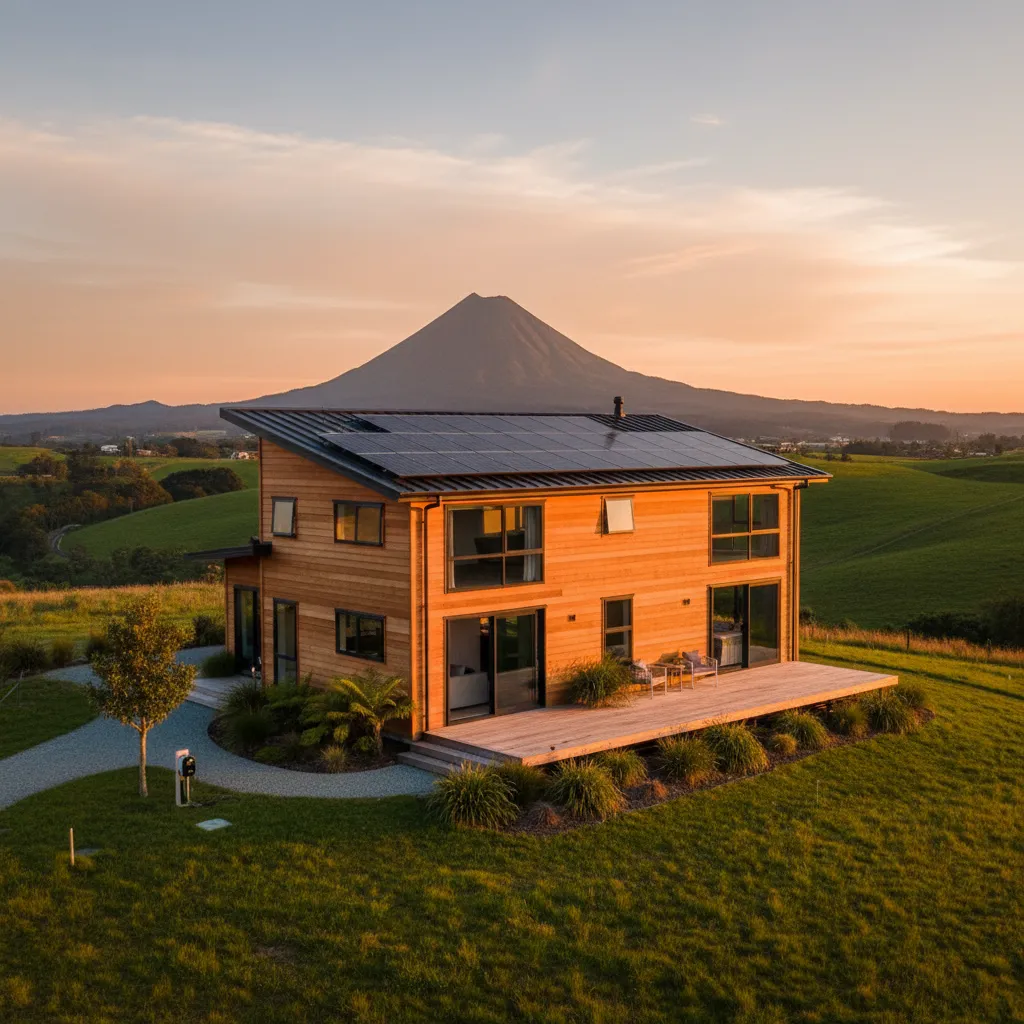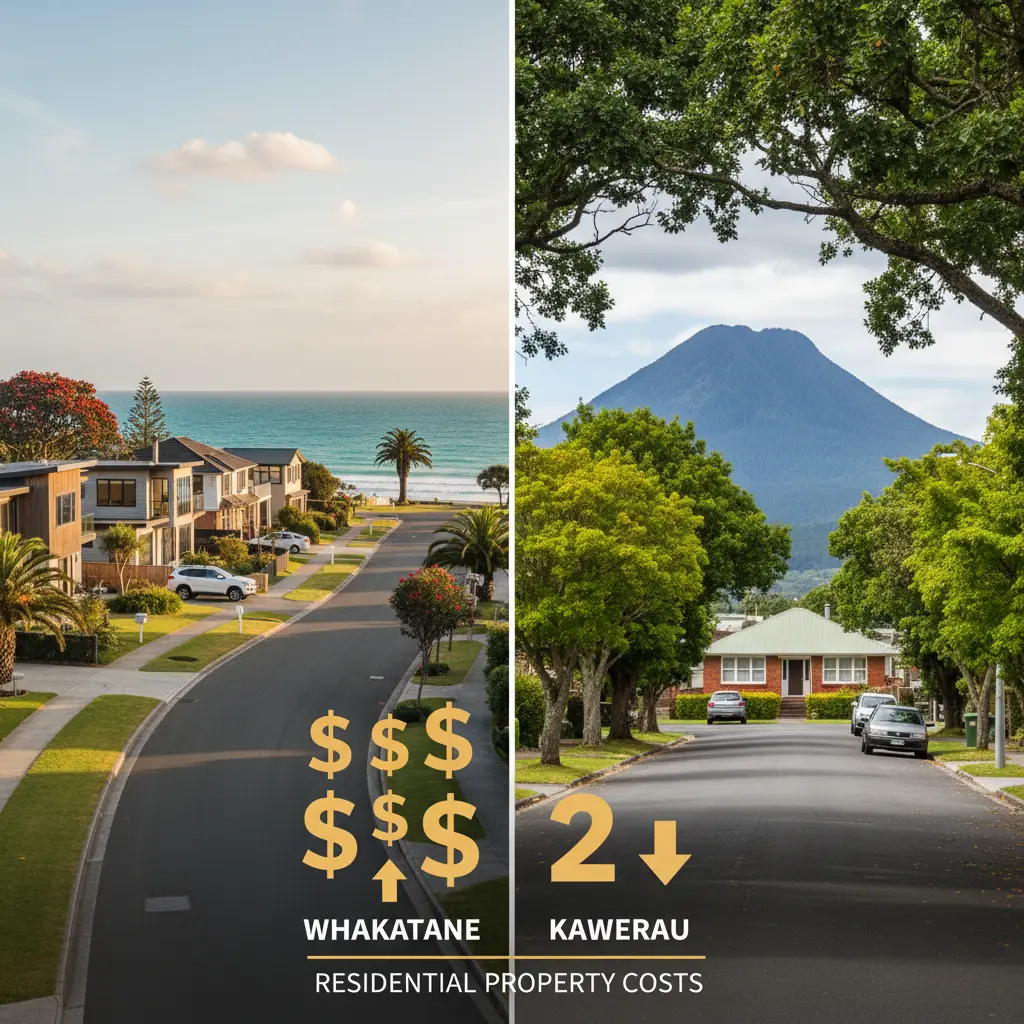
The Kawerau real estate market in 2024 is defined by stabilized growth and sustained affordability relative to the wider Bay of Plenty. While median prices have adjusted from their post-pandemic peaks, high rental yields and increasing demand from first-home buyers continue to drive activity. The district remains a strategic hub for industrial investment and lifestyle-focused property seekers.
Kawerau has evolved significantly from its origins as purely a mill town into a robust regional growth hub. As property prices in neighboring Tauranga and Whakatāne become increasingly prohibitive for many, Kawerau offers a compelling alternative without sacrificing access to the Bay of Plenty’s renowned lifestyle amenities. This analysis delves deep into the current trends, data, and forecasts shaping the property landscape this year.
Median House Price Growth Analysis
Understanding the trajectory of property values is crucial for anyone looking to enter the Kawerau real estate market trends 2024 discussion. Historically, Kawerau was viewed as an entry-level market, but the last five years have seen a dramatic recalibration of value.
In 2024, we are witnessing a period of normalization. Following the meteoric rise during the 2020-2022 boom where values nearly doubled in some sectors, the current median sale price has settled. This stabilization is a healthy sign of a maturing market rather than a crash. The volatility has decreased, providing both vendors and purchasers with more certainty regarding valuation.
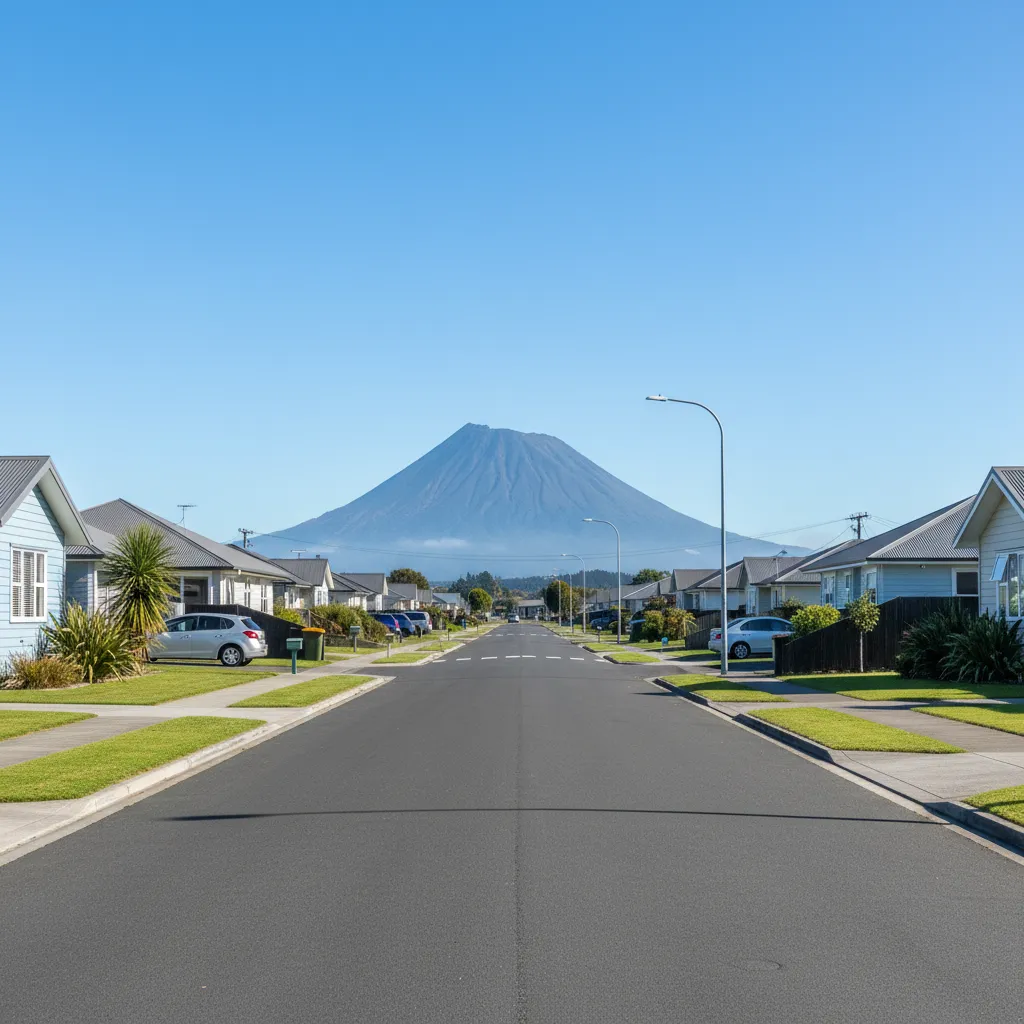
What is the current median price trend?
While specific month-to-month data fluctuates, the trend line for 2024 indicates a plateauing of prices rather than sharp declines seen in major metros like Auckland or Wellington. This resilience is largely due to the low entry price point. When a market is already affordable, it is less susceptible to the massive corrections caused by interest rate hikes, as the mortgage serviceability remains attainable for a larger segment of the population.
Key factors influencing price stability include:
- Comparative Affordability: Kawerau remains significantly cheaper than Whakatāne, which is only a 25-minute drive away.
- Renovation Value Add: A significant portion of sales involves older stock that has been renovated, pushing up the median sale price of sold inventory.
- Land Value: The generous section sizes in Kawerau (often 700sqm+) underpin the property value, offering tangible assets that townhouses in larger cities cannot match.
Inventory Levels and Time-on-Market
The dynamics of supply and demand have shifted perceptibly throughout 2024. Earlier in the decade, listings would vanish within days, often with multiple offers. Today, the pace has moderated, creating a more balanced environment.
Are listings increasing in Kawerau?
Yes, inventory levels have seen a gradual increase throughout 2024. This increase in stock gives buyers more leverage and choice. Vendors are no longer holding all the cards, which necessitates realistic pricing strategies. The “days to sell” metric has extended, moving from a frenetic 20-day average in peak boom times to a more standard 40-50 day period. This extension allows for proper due diligence, building inspections, and finance approvals, leading to fewer crashed contracts.
For sellers, this means that presentation and marketing are paramount. Properties that are “move-in ready” continue to command premiums and sell faster than “do-up” projects, as high construction costs and interest rates make buyers wary of taking on extensive renovations immediately.

Buyer Demographics: First Home Buyers vs Investors
The profile of the average buyer in Kawerau has undergone a distinct shift in 2024. While the town was once the playground of yield-seeking investors, regulatory changes and tax adjustments have altered the playing field.
Is Kawerau good for first home buyers?
Absolutely. Kawerau remains one of the few strongholds in New Zealand where home ownership is attainable for average-income earners. In 2024, First Home Buyers (FHBs) have become the dominant force in the market. The ability to purchase a standalone three-bedroom home on a full section for under $500,000 (in many cases) is a rarity nationally.
This demographic shift is positive for the community. Owner-occupiers tend to stay longer, invest more in property maintenance, and participate more actively in the local community. We are seeing young families relocate from Tauranga and Rotorua, driven by the desire to reduce mortgage stress and improve work-life balance.
The Investor Landscape
Investors have not disappeared, but they have become more selective. The “flipper” market has cooled due to high renovation costs and capital gains tax implications (bright-line test variations). However, long-term “buy and hold” investors are still active. They are attracted by the rental yields which, despite price rises, remain superior to most main centers. The demand for rental properties in Kawerau is high, driven by local industry workers, keeping vacancy rates low.
Rental Yields and Investment Potential
For the commercially minded reader, the numbers in Kawerau still stack up favorably compared to the national average. The Kawerau real estate market trends 2024 data suggests that while capital gains have slowed, cash flow remains king.

Rental prices have continued to creep upward, driven by a shortage of quality rental stock. With the median house price hovering in an affordable bracket, gross rental yields often sit between 5% and 7%, vastly outperforming the 2-3% yields typical in Auckland.
Key Investment Drivers:
- Industrial Stability: Major employers in the region (forestry, paper mills, geothermal energy) provide a steady stream of tenants with reliable incomes.
- Healthy Homes Standards: Many of the ex-ministry of works homes are solid but required upgrades to meet Healthy Homes standards. Properties that have already completed this compliance are selling at a premium to investors who want a hands-off asset.
Regional Growth Factors Driving Value
Real estate cannot be analyzed in a vacuum; it is intrinsically linked to the economic health of the region. Kawerau is positioning itself as a leader in industrial symbiosis and sustainable energy.
How does local industry affect property prices?
The robust industrial sector in Kawerau acts as a floor for property prices. The Putauaki Trust industrial development and the container terminal have solidified the town’s role as a logistics and manufacturing hub. This economic activity ensures job security, which in turn secures mortgage payments and rental income.
Furthermore, the council’s focus on lifestyle improvements—such as the continued development of the Tarawera River walkways, the free hot pools, and community facilities—increases the desirability of the town as a place to live, not just work. This “lifestyle dividend” is slowly being priced into the market as perceptions of the town shift from industrial to recreational.

Predictions for the 2025 Market
Looking ahead, the forecast for the Kawerau market remains cautiously optimistic. As interest rates are predicted to soften moving into 2025, we anticipate a resurgence in activity.
Will house prices rise in 2025?
We predict a modest appreciation in values for 2025, likely in the range of 3-5%. This will be driven by falling interest rates reigniting buyer borrowing power. However, the days of double-digit growth are unlikely to return immediately. The market will favor steady, sustainable growth.
Watchlist for 2025:
- Interest Rate Cuts: Any reduction in the OCR (Official Cash Rate) will have an outsized effect on entry-level markets like Kawerau, where buyers are highly sensitive to lending criteria.
- New Developments: Keep an eye on new residential subdivisions. As land becomes scarcer, new builds will set a new pricing benchmark for the district.
- Regional Connectivity: Improvements to State Highway networks connecting to the Tauranga Port will further enhance Kawerau’s appeal as a logistics hub, potentially drawing more workers and residents.
In summary, the Kawerau real estate market trends 2024 paint a picture of a resilient, maturing market. For first home buyers, the window of opportunity is wide open. For investors, the focus has shifted to yield and long-term hold strategies. Kawerau is no longer a secret; it is a established regional contender offering genuine value in a high-priced nation.
People Also Ask
Is Kawerau a good place to invest in property?
Yes, Kawerau is considered a strong investment location due to its high rental yields relative to property purchase prices and low vacancy rates driven by a stable industrial workforce.
Why are houses in Kawerau so cheap?
Historically, Kawerau was a single-industry town with an abundance of ex-state housing. While prices have risen significantly, land values remain lower than coastal Bay of Plenty areas, keeping overall prices affordable.
What is the average house price in Kawerau 2024?
While prices fluctuate monthly, the median house price in Kawerau for 2024 generally hovers between $420,000 and $480,000, depending on the condition and location of the property.
Are house prices dropping in Kawerau?
Prices in Kawerau have stabilized rather than dropped significantly. The market has plateaued after the post-COVID boom, showing resilience due to its affordability compared to national averages.
What is the main industry in Kawerau?
The main industries are forestry, wood processing, and pulp and paper manufacturing, supported by geothermal energy production. These industries provide the economic backbone for the local housing market.
How long does it take to sell a house in Kawerau?
In 2024, the average time to sell has normalized to approximately 40-50 days, reflecting a balanced market where buyers are taking more time to complete due diligence.