Industrial photography locations in NZ offer a unique fusion of heavy infrastructure and dramatic landscapes. Key sites include the iconic Huntly Power Station in Waikato, the geothermal pipe networks of Wairakei, the Kinleith Pulp and Paper Mill for steam visuals, and the Tiwai Point Aluminium Smelter, providing opportunities to capture raw mechanical aesthetics against New Zealand’s natural backdrop.
The Industrial Landscape of New Zealand
New Zealand is globally renowned for its pristine fjords, rolling hills, and Lord of the Rings-esque scenery. However, for the discerning photographer, there is a gritty, compelling beauty hidden within the country’s infrastructure. Industrial photography locations in NZ provide a stark, brutalist counter-narrative to the typical tourism brochure. It is a genre that celebrates the engineering might required to power a nation situated on the edge of the world.
From the towering twin chimneys of the Waikato to the labyrinthine geothermal pipes of the Central Plateau, New Zealand’s industrial zones are often situated directly adjacent to native bush or major waterways. This proximity creates a visual tension that is unmatched elsewhere. The “Industrial Tourist” does not seek traditional beauty but looks for geometry, scale, and the atmospheric drama of steam meeting cold air. Whether you are a local exploring your backyard or a domestic tourist looking for a different angle on a road trip, capturing these giants requires planning, respect for boundaries, and a keen eye for light.
Top Industrial Photography Locations NZ
Finding accessible locations that offer photogenic potential without requiring security clearance can be challenging. Below are the premier sites for capturing New Zealand’s industrial heritage and modern infrastructure.
Where can I photograph power stations in NZ?
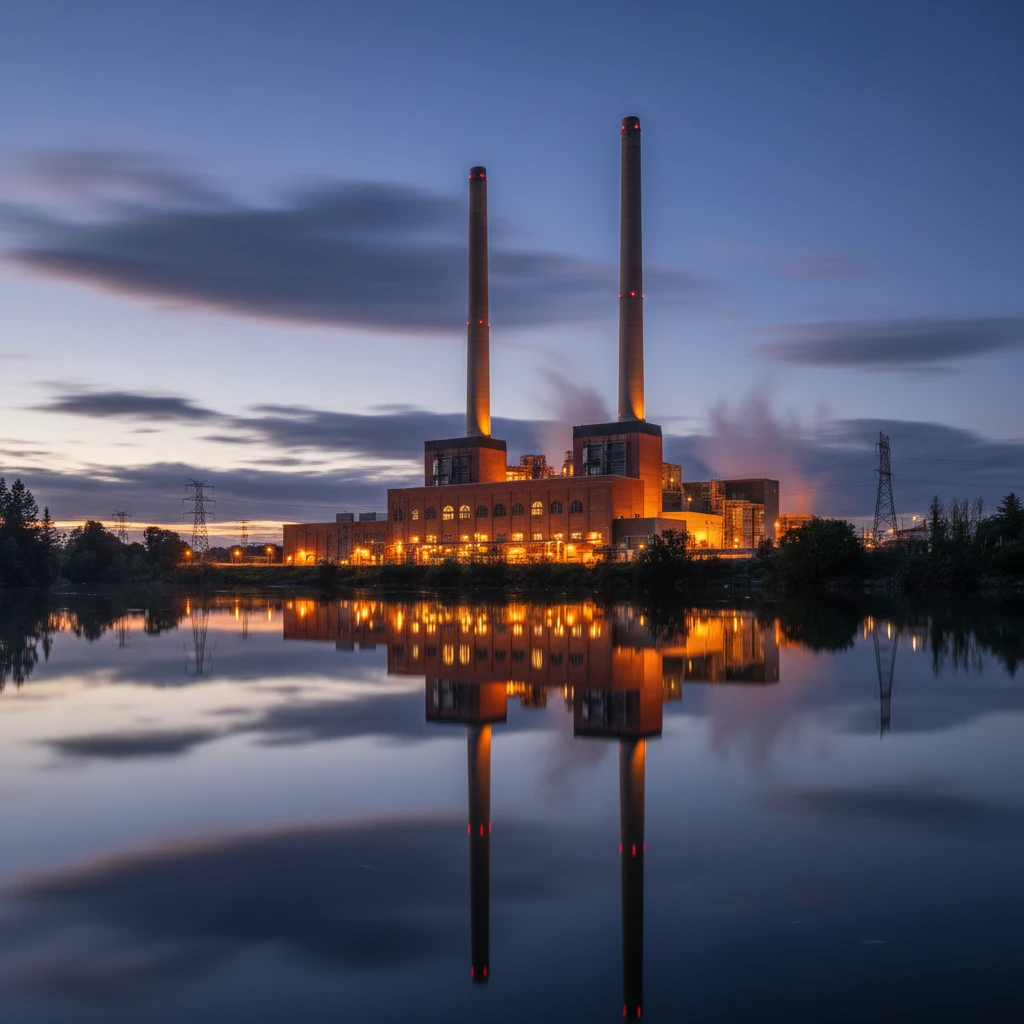
The Waikato region is the heartland of New Zealand’s thermal power generation and offers the most accessible large-scale industrial subjects. The Huntly Power Station is the crown jewel of New Zealand industrial photography. Its massive twin chimneys dominate the skyline and can be seen for kilometers. The best vantage points are from the western bank of the Waikato River, directly across from the plant. This location allows for stunning reflection shots, particularly during the golden hour when the red brickwork glows against the dark water.
What are the best geothermal photography spots?
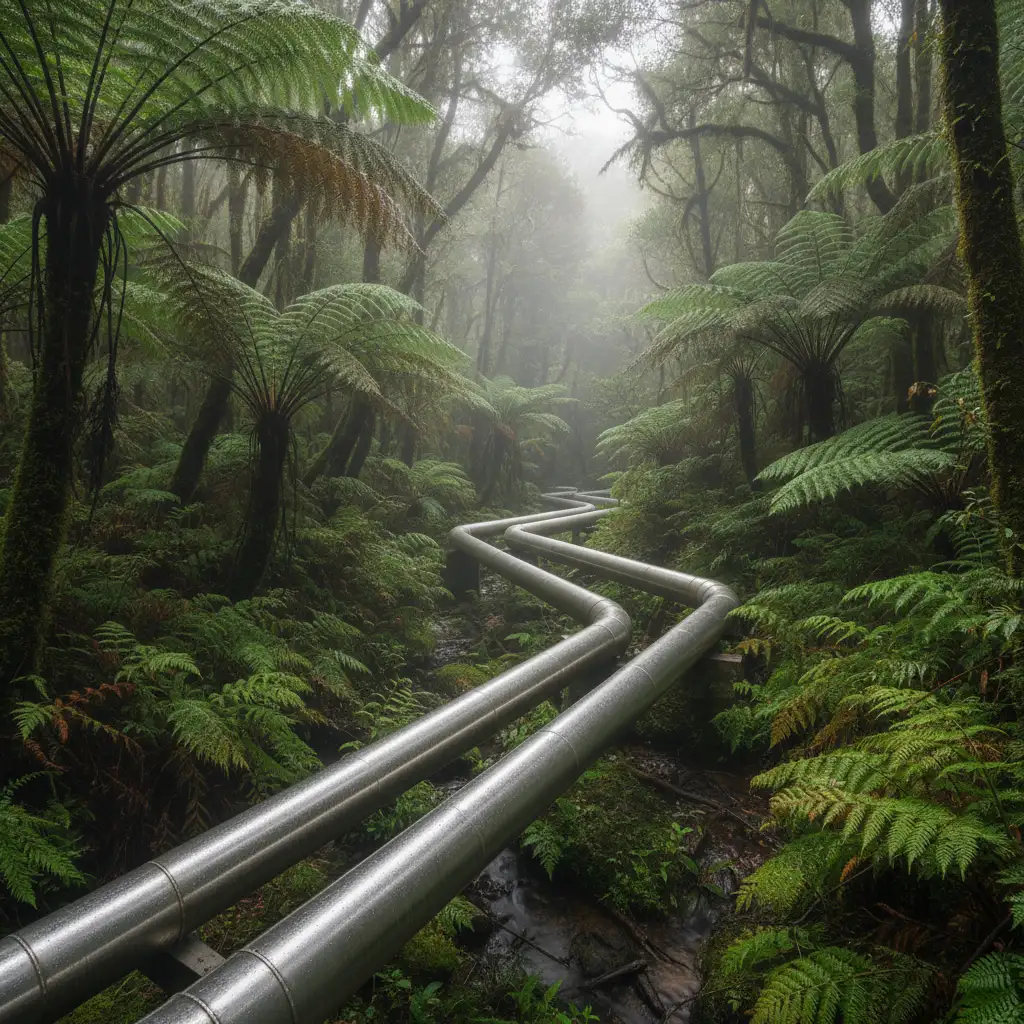
Moving south to the Taupō Volcanic Zone, the Wairakei and Ohaaki Geothermal Power Stations offer a sci-fi aesthetic. Here, chrome pipes snake through scrub and steam rises from the ground, creating a landscape that looks almost extraterrestrial. The Wairakei Terraces walk provides safe, close-up views of silica formations and steam, but the best industrial shots are often taken from the viewing lookouts off State Highway 1 and 5, where telephoto lenses can compress the layers of pipes and steam vents.
Are there industrial photography spots in the South Island?
Absolutely. The Tiwai Point Aluminium Smelter near Bluff is a monolithic structure located at the very bottom of the South Island. While access to the site is restricted, the road leading towards the point offers views of the smelter’s silhouette against the rugged southern coast. Additionally, the South Island’s hydro dams, such as the Benmore Dam and Roxburgh Dam, offer incredible geometric patterns. Benmore, in particular, allows you to drive across the top, providing a unique perspective of the massive concrete spillway contrasting with the blue waters of Lake Benmore.
Best Vantage Points for Mill Visuals
Pulp and paper mills are among the most dynamic subjects for industrial photography locations in NZ due to their sheer scale, constant activity, and continuous steam output.
Kinleith Mill (Tokoroa)
The Kinleith Mill is a behemoth of industry. Located on State Highway 1 south of Tokoroa, it is impossible to miss. The facility operates 24/7, meaning night photography here is spectacular. The complex is lit up like a small city, with sodium lights casting an orange glow on the billowing steam.
Vantage Point Strategy: Do not attempt to enter the facility. The best shots are achieved from the roadside pull-offs on SH1. A long lens (70-200mm or longer) is essential here to isolate specific towers or conveyor belts. There is a specific layby just south of the mill that provides an elevated view, allowing you to capture the density of the infrastructure without fences obstructing your view.
Tasman Mill (Kawerau)
Situated in the Bay of Plenty, the Tasman Mill is another titan of the timber industry, backdropped by the volcanic cone of Mount Putauaki. This creates a powerful composition of industry versus geology. The contrast between the white steam of the mill and the dark green slopes of the mountain is a classic New Zealand industrial image.
Capturing Steam Plumes in Winter
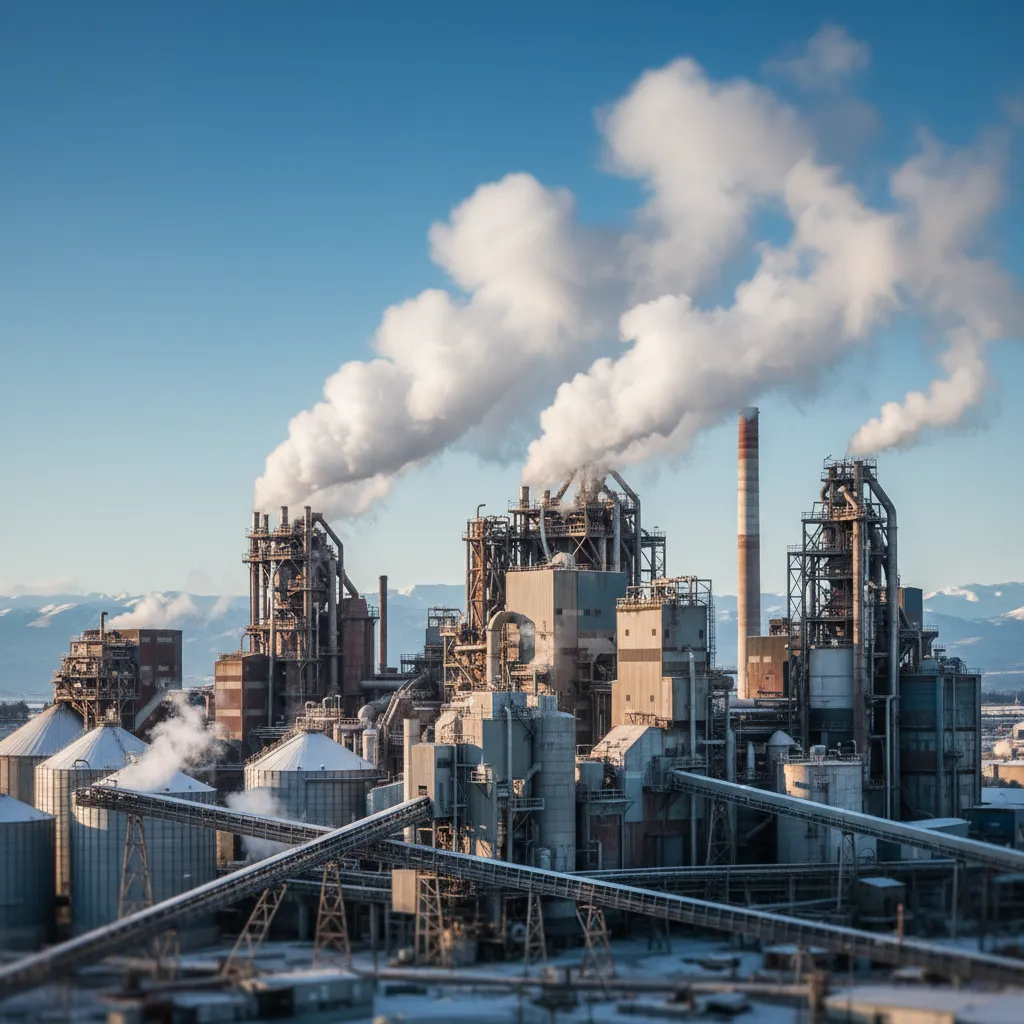
For the industrial photographer, steam is the element that brings a static structure to life. It adds movement, atmosphere, and scale. However, steam is not always visible; it requires specific atmospheric conditions to truly pop.
Why is winter the best time for industrial photography?
Cold air is critical. The greater the temperature difference between the hot exhaust steam and the ambient air, the more voluminous and dense the plume will appear. In the height of summer, a mill might look dormant; in mid-winter at -2°C, it looks like a cloud factory.
Lighting Techniques for Steam
To maximize the visual impact of steam plumes at industrial photography locations NZ, consider the following techniques:
- Backlighting: Position yourself so the sun is behind the steam (but blocked by the structure or just out of frame). This illuminates the water droplets, making the steam glow bright white or gold against a darker background.
- Blue Hour: Shooting just before sunrise or just after sunset allows you to capture the cool blue tones of the sky contrasting with the warm artificial lights of the factory, while the steam retains detail.
- Long Exposure: Using a Neutral Density (ND) filter and a tripod allows for exposures of 10 to 30 seconds. This turns choppy steam puffs into smooth, painterly streaks, giving the image a surreal, ethereal quality.
The Art of Contrast: Industry and Nature
One of the defining characteristics of New Zealand’s industrial landscape is that it rarely exists in a concrete jungle. It exists in paddocks, forests, and river valleys. Leveraging this contrast is key to successful storytelling in your images.
Compositional Strategies
Don’t just fill the frame with steel. Include the context. A shot of the Huntly Power Station is impressive, but a shot of the station framed by flax bushes or with sheep grazing in the foreground tells a uniquely “New Zealand” story. This juxtaposition highlights the uneasy but necessary relationship between our economy and our environment.
Look for leading lines where nature meets machine. This could be a gravel road winding through tussock grass towards a wind farm, or the straight lines of geothermal pipes cutting through chaotic native fern growth. The goal is to show the intersection of the organic and the constructed.
Safety Rules and Legalities for Industrial Zones
This is the most critical section of this guide. Industrial zones are dangerous environments and are subject to strict laws. Ignorance is not a defense, and compromising safety can ruin the reputation of photographers nationwide.
What are the trespassing rules in NZ?
In New Zealand, you must not enter private property without permission. Most industrial sites have strict Health & Safety protocols that require inductions and protective gear. Crossing a fence line to get a better angle is trespassing. Always shoot from public land—roadsides, public parks, or designated lookouts.
Drone Regulations for Industrial Sites
Drone photography has revolutionized industrial imaging, but it is heavily regulated. You cannot fly over private property without the owner’s consent. Furthermore, many industrial sites (especially power stations and substations) are designated as critical infrastructure or “No Fly Zones” due to magnetic interference or safety risks. Always check the AirShare app before flying. Flying a drone over a substation or mill without authorization is likely to result in security intervention and potential fines.
Personal Safety Gear
Even when shooting from the roadside, you are often near high-speed traffic (like SH1).
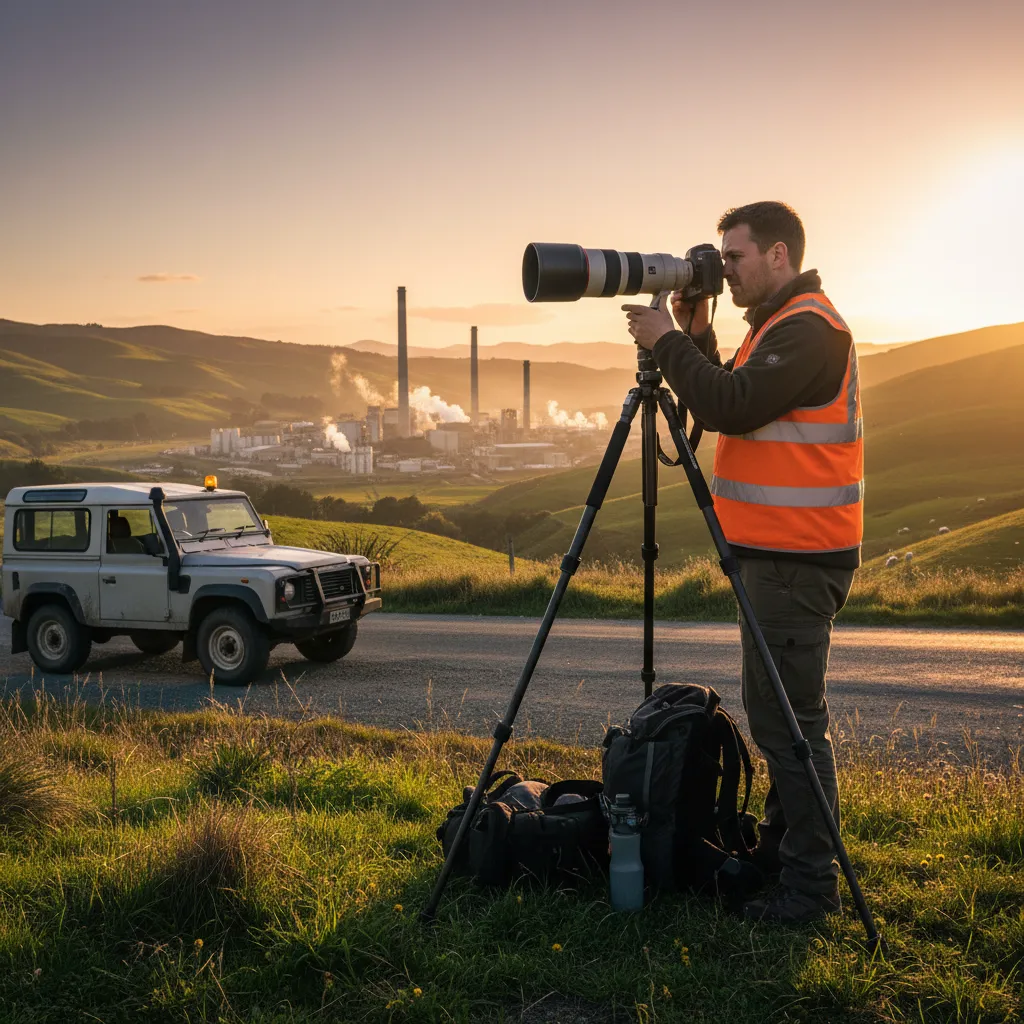
- High-Visibility Vest: Wear a hi-vis vest. It makes you visible to trucks and traffic, and it also signals to security guards that you are prioritizing safety, making them less likely to view you as a suspicious threat.
- Sturdy Footwear: Industrial outskirts are often muddy, uneven, or covered in sharp debris.
- Identification: Carry ID. If security approaches you, be polite, show your ID, and explain you are taking photos from public land. If asked to leave, it is often better to comply and de-escalate than to argue legalities on the roadside.
Essential Gear for the Industrial Photographer
To capture high-quality images at industrial photography locations NZ, specific equipment is recommended to overcome the challenges of distance and lighting.
Recommended Lenses
- Telephoto Zoom (70-200mm or 100-400mm): This is your workhorse. It allows you to shoot from safe, public locations while making the subject appear close. It also compresses the perspective, making background mountains loom larger behind the factories.
- Wide Angle (16-35mm): Useful for shots where you can get close to the perimeter fence, emphasizing the scale and height of cooling towers or chimneys.
- Tilt-Shift Lens: For the advanced photographer, a tilt-shift lens helps correct the converging vertical lines when shooting tall structures from ground level, keeping the architecture looking straight.
Filters and Accessories
- Circular Polarizer (CPL): Essential for cutting glare on wet pipes, windows, and water surfaces. It also deepens the blue of the sky, increasing the contrast with white steam.
- Tripod: Mandatory for the low-light conditions of dawn/dusk and for long-exposure steam shots.
Frequently Asked Questions
Is it legal to photograph factories in New Zealand?
Yes, it is generally legal to photograph any building or structure visible from a public place (like a road or footpath) in New Zealand. However, you cannot enter the property to take photos without permission, and you must respect privacy laws regarding individuals working at the site.
What is the best time of day for industrial photography?
The “Blue Hour” (roughly 20-40 minutes before sunrise and after sunset) is ideal. It balances the natural light of the sky with the artificial lights of the facility. For steam plumes, early mornings in winter are best due to the cold air.
Can I use a drone for industrial photography in NZ?
Only if you are flying over public land and maintain visual line of sight, OR if you have specific permission from the land owner to fly over the site. Many industrial zones have flight restrictions. Always check the AirShare app.
Where are the best abandoned industrial locations in NZ?
True abandoned locations are rare and often unsafe. However, parts of the old cement works in Warkworth or historic gold mining machinery in Otago offer abandoned industrial aesthetics that are accessible to the public.
How do I photograph steam to look dramatic?
Use a telephoto lens to compress the steam against a dark background. Underexpose the image slightly to preserve the highlights in the white steam, and try to shoot when the steam is backlit by the sun.
Do I need a permit to photograph power stations?
Not if you are standing on public land. However, if you wish to enter the facility for closer shots, you will strictly need a permit, a safety induction, and likely a guide. These are rarely granted to hobbyists.