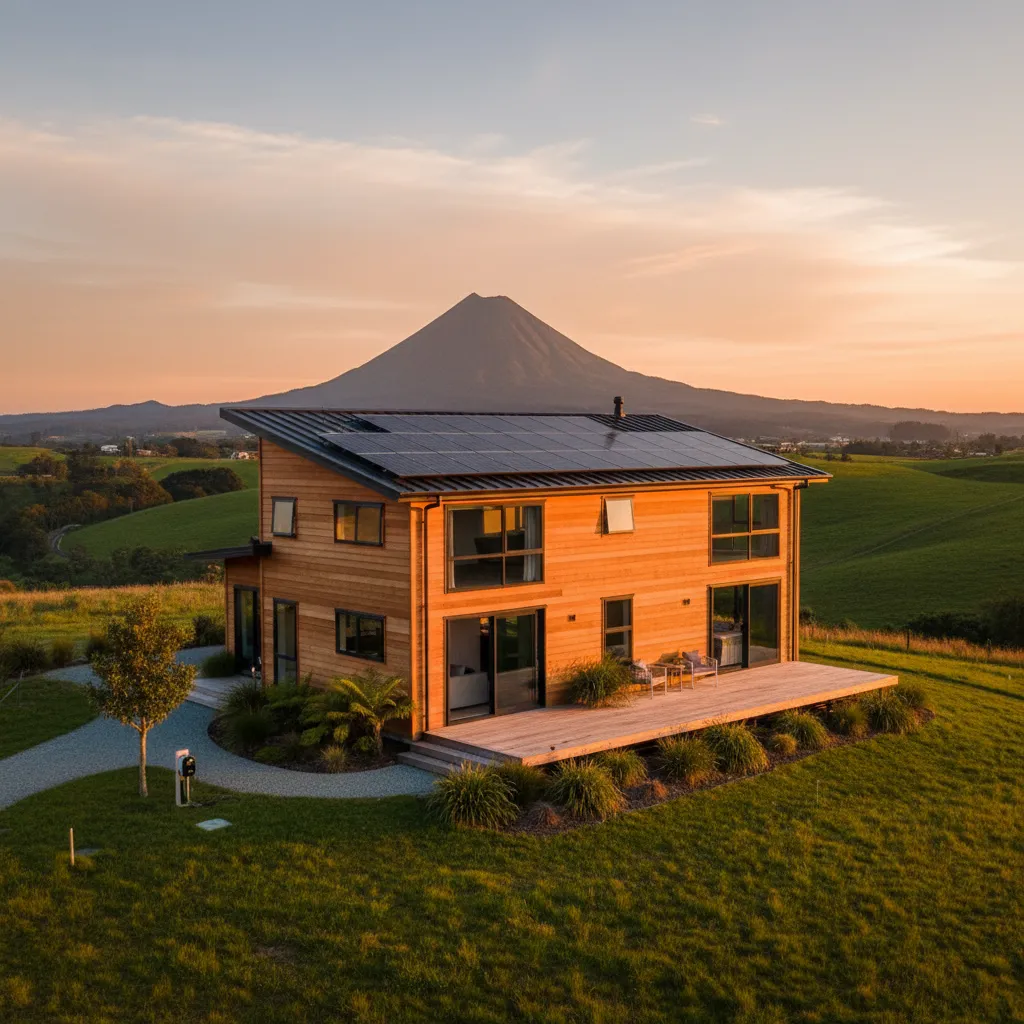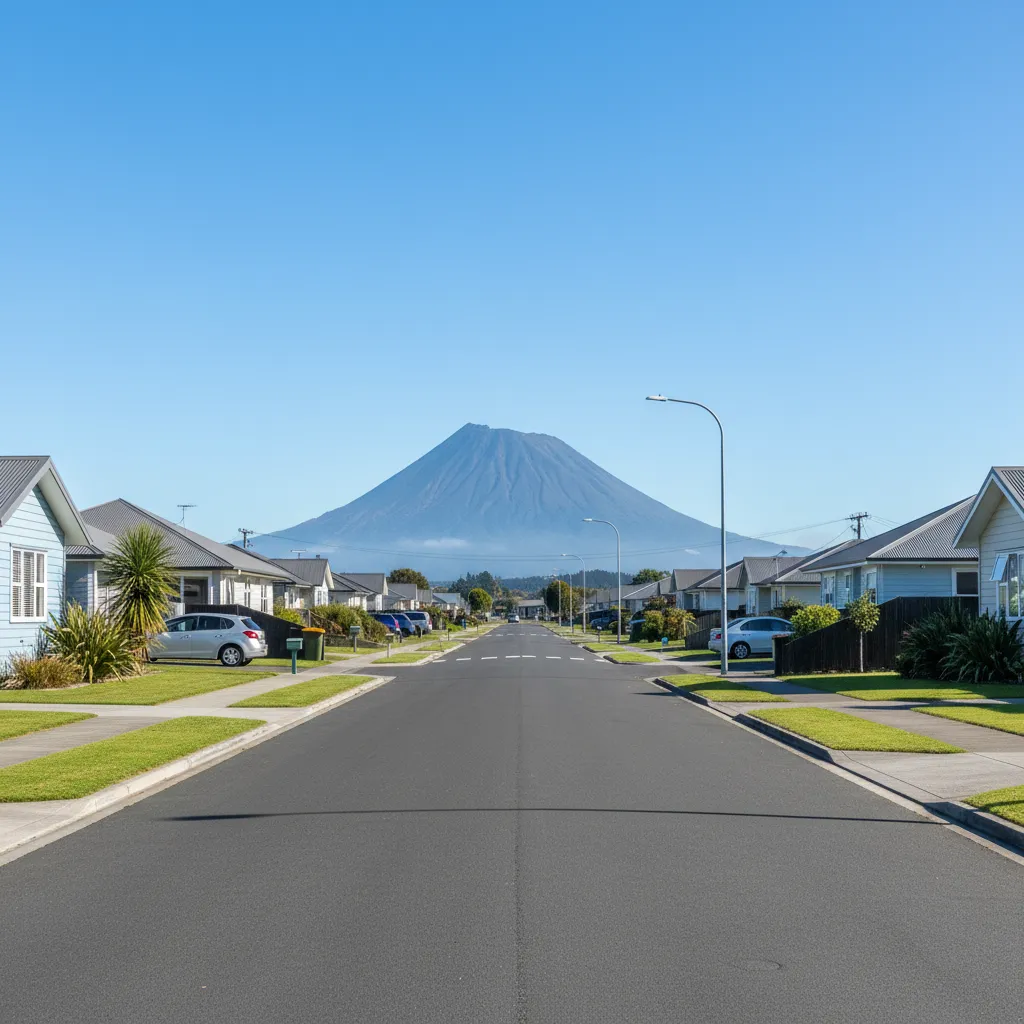
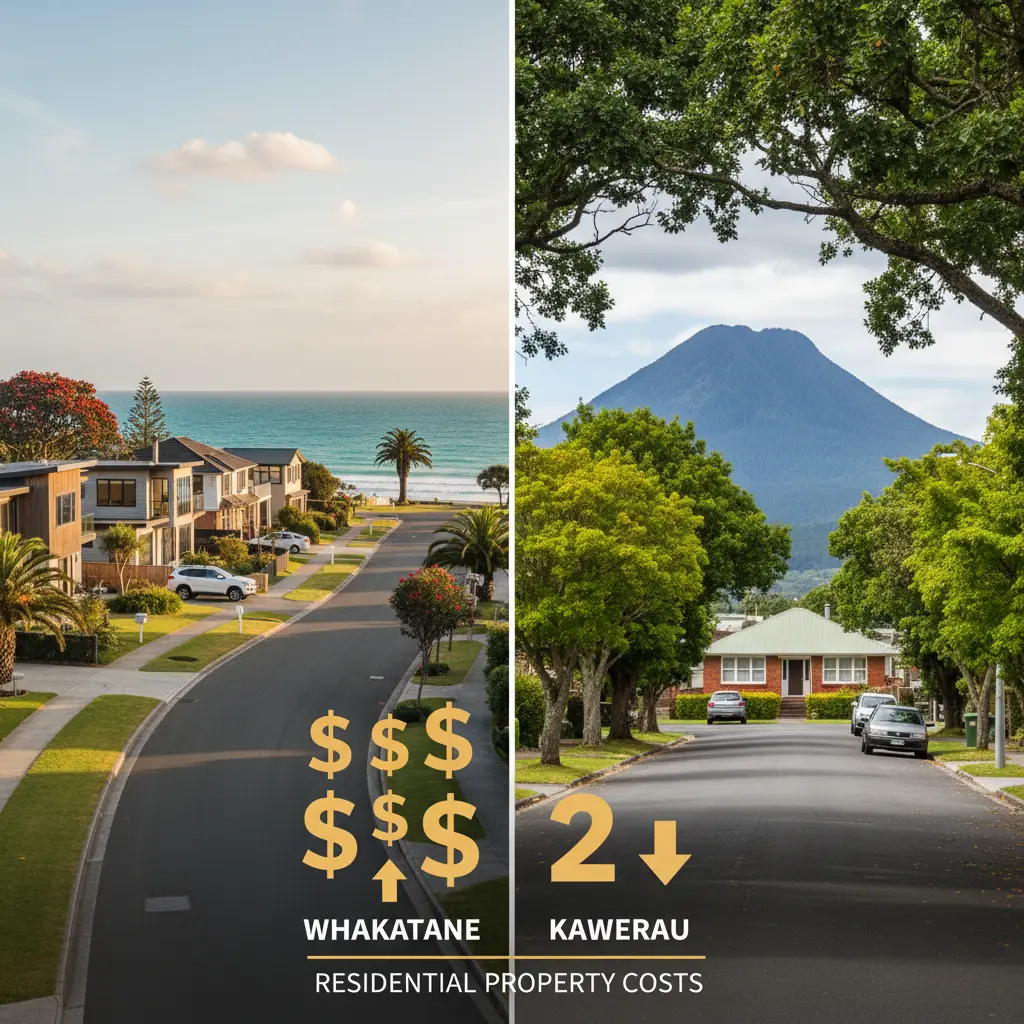
When you compare council rates Whakatane vs Kawerau, Kawerau District Council typically offers significantly lower annual rates for average residential properties compared to the Whakatāne District Council. This difference is primarily driven by lower property Capital Values (CV) in Kawerau and a distinct rating structure focused on affordability, whereas Whakatāne rates reflect higher coastal infrastructure costs and tourism-related service demands.
For property investors, first-home buyers, and retirees looking to maximize their disposable income, understanding the nuances of local government taxation in the Eastern Bay of Plenty is crucial. While both districts sit within the same region, their approach to funding, service delivery, and long-term planning varies drastically.
Breakdown of Annual Rates for Average Homes
When analyzing the cost of living in the Bay of Plenty, the disparity in council rates is a major factor. Rates are not merely a fee; they are a calculated tax based on property valuations and the revenue requirements of the local council to maintain infrastructure. In this comparison, Kawerau consistently emerges as the more financially accessible option.
The Kawerau District Council (KDC) Structure
Kawerau is unique in New Zealand as one of the smallest distinct territorial authorities. Because the district covers a compact geographic area with a concentrated population, the infrastructure network (roads, pipes, and utilities) is less spread out than in larger districts. This efficiency often translates to competitive rating models.
For an average residential property in Kawerau, rates are generally calculated based on a combination of the Land Value (LV) and fixed charges. Because property values in Kawerau have historically been lower than the national average—though they are rising rapidly due to increased demand—the ad valorem (value-based) portion of the rates bill remains lower than in neighboring coastal towns.
The Whakatāne District Council (WDC) Structure
Whakatāne District Council manages a vast area including the main township, Ōhope Beach, Edgecumbe, Murupara, and extensive rural hinterlands. This geographic diversity presents a challenge: maintaining a massive roading network and coastal infrastructure against the threats of climate change.
Consequently, an average home in Whakatāne or Ōhope attracts a significantly higher rates bill. This is partly due to higher Capital Values (CVs) but also due to the sheer cost of servicing a larger, more complex district. The “Targeted Rates” in Whakatāne for things like harbor maintenance and disaster mitigation also add to the total annual cost.
Comparative Cost Analysis
While specific dollar amounts fluctuate annually based on the Long Term Plan (LTP) adoptions, a typical comparison reveals a distinct gap:
- Whakatāne/Ōhope: Residential rates often sit at the higher end of the regional spectrum, reflecting premium coastal living and extensive amenities.
- Kawerau: Residential rates are frequently 20% to 35% lower than comparable sized dwellings in Whakatāne. For a fixed income household or a young family, this difference can amount to thousands of dollars in savings over a five-year period.
Key Factors Influencing Rate Differences
To truly understand the “compare council rates Whakatane vs Kawerau” dynamic, one must look beyond the bottom line and understand the mechanics of how these figures are derived.
Property Valuations (CV vs. LV)
Councils use property valuations to determine the share of rates each ratepayer contributes.
- Whakatāne: High demand for coastal property drives up Capital Values. Even a modest home in Whakatāne may have a CV double that of a superior home in Kawerau. Since rates are partly based on value, the Whakatāne homeowner pays more for the same level of service.
- Kawerau: While the market is booming and values are correcting upwards, the base entry point remains affordable. This keeps the variable portion of the rates bill manageable.
Uniform Annual General Charge (UAGC)
Both councils utilize a UAGC—a fixed flat fee paid by every ratepayer regardless of property value. This charge ensures that every resident contributes to essential services like governance, libraries, and civil defense. Kawerau’s ability to keep this charge reasonable, despite a smaller population base, is a testament to efficient fiscal management and the significant contribution of heavy industry (industrial ratepayers) to the district’s revenue.
Services Included in Council Rates
Ratepayers often ask, “What am I actually paying for?” When comparing the two districts, the value proposition shifts. Whakatāne offers scale, while Kawerau offers accessibility and community-centric perks.

Kawerau: The “Free” Services Model
Kawerau District Council prides itself on a high level of service delivery that directly benefits the lifestyle of its residents. The rates bill in Kawerau subsidizes several amenities that are often user-pays in other districts:
- Maurie Kjar Memorial Swimming Pool: One of the district’s crown jewels, the pool complex is free for general admission. This is a massive saving for families compared to the entry fees charged in other districts.
- District Library: A hub of digital connectivity and community programs, fully funded through rates.
- Parks and Reserves: Kawerau is known as a “Garden Town.” A significant portion of rates goes toward maintaining the pristine condition of Stoneham Park, Monika Lanham Reserve, and the river walkways.
- Refuse Collection: Efficient kerbside rubbish and recycling collection services are included.
Whakatāne: Infrastructure and Tourism
In Whakatāne, rates fund a different set of priorities driven by tourism and geography:
- Coastal Management: Significant funds are directed toward sea walls, dune protection, and wharf maintenance.
- Tourism Facilities: Public toilets, campervan sites, and visitor information centers require ratepayer subsidy.
- Aquatic Centres: While excellent, the Whakatāne Aquatic Centre generally operates on a user-pays model for entry, unlike the free access in Kawerau.
Long-term Rating Strategies and Future Outlook
Commercial investors and long-term residents need to look at the horizon. How will rates change over the next 10 years? Both councils operate under Long Term Plans (LTP) that forecast expenditure and rate caps.

Kawerau’s Growth Strategy
Kawerau is currently in a phase of aggressive residential development. The council’s strategy involves increasing the ratepayer base by opening up new subdivisions (such as the Central Cove development). By increasing the number of rateable properties, the council aims to spread the fixed costs of infrastructure over more people, theoretically suppressing drastic rate hikes for existing residents.
Furthermore, Kawerau actively encourages industrial symbiosis. The heavy industrial zone contributes significantly to the rating pot, alleviating the burden on residential ratepayers—a luxury Whakatāne does not possess to the same concentration.
Whakatāne’s Resilience Strategy
Whakatāne’s long-term strategy is dominated by climate resilience. The projected costs for flood protection and managing coastal erosion are substantial. Future rate rises in Whakatāne are likely to outpace inflation as the district grapples with these environmental imperatives. For a homeowner, this suggests that the gap between Whakatāne and Kawerau rates may widen further in the future, making Kawerau an even more attractive financial proposition.
How to Pay Your Kawerau Rates
If you choose to invest in the Kawerau lifestyle, the council has modernized its payment systems to ensure ease of transaction. Managing your outgoing expenses is part of smart financial planning.
Payment Options
Kawerau District Council offers several convenient methods to clear your rates bill:
- Direct Debit (Recommended): The most popular method. You can set up weekly, fortnightly, monthly, or quarterly payments. This spreads the cost and ensures you never incur late penalties.
- Online Banking: You can pay via internet banking. Ensure you use your valuation number as the reference to guarantee the payment is allocated to your property.
- In-Person: Rates can be paid at the Council Office on Ranfurly Court during business hours.
- Rates Rebates: Low-income earners may be eligible for a government rates rebate. The KDC staff are well-regarded for assisting residents in applying for this subsidy, further reducing the annual cost.
The Lifestyle Dividend: Value for Money
When you compare council rates Whakatane vs Kawerau, the calculation should ultimately come down to value for money. What lifestyle does your contribution buy you?

In Whakatāne, you are paying a premium for proximity to the ocean and a larger retail precinct. It is a lifestyle choice that comes with a higher price tag, both in property purchase price and ongoing annual rates.
In Kawerau, the value proposition is distinct. The lower rates bill frees up disposable income. This “lifestyle dividend” allows residents to spend more on travel, home improvements, or leisure. With the district’s central location—only 20 minutes to the lakes and 30 minutes to the coast—residents enjoy the best of the Bay of Plenty without the premium overheads. The combination of affordable housing, lower rates, and free community facilities positions Kawerau as a smart growth hub for the savvy investor. For those considering a change of scenery, learning about the Relocation & Digital Nomad Lifestyle might be the next logical step.
Frequently Asked Questions
Do Kawerau rates include water charges?
Yes, typically Kawerau residential rates include a fixed charge for water connection. However, usage may be metered for commercial properties or excessive residential use, depending on specific council policies which can be reviewed in the annual plan.
Why are Whakatāne rates higher than Kawerau?
Whakatāne rates are generally higher due to higher property capital values, a larger and more complex infrastructure network (including coastal management), and a wider range of tourism-related amenities that require funding.
Can I get a discount on my council rates in Kawerau?
You may be eligible for the Central Government Rates Rebate Scheme if you are on a low income. Additionally, setting up a direct debit prevents late payment penalties, which saves money in the long run. Residents are always encouraged to understand local customs, such as respecting the Kawerau Marae & Tikanga.
How often are rateable values updated?
Quotable Value (QV) typically updates rating valuations every three years. These revaluations adjust the relative share of rates paid by each property but do not necessarily increase the total rates revenue collected by the council.
Do I pay Bay of Plenty Regional Council rates as well?
Yes. Regardless of whether you live in Whakatāne or Kawerau, you must pay rates to the Bay of Plenty Regional Council. These are often invoiced separately or collected alongside your district rates depending on the specific arrangement for the year.
Does Kawerau have a targeted rate for industry?
Yes, Kawerau has a robust industrial base. The rating policy differentiates between residential and industrial/commercial use, ensuring that heavy industry contributes a fair share toward the infrastructure they utilize, which helps subsidize residential rates.