
Geothermal power in Kawerau harnesses high-pressure steam from the Taupō Volcanic Zone to generate electricity and provide direct industrial process heat. As the world’s largest application of geothermal process steam, this sustainable resource powers major timber processing operations while contributing significantly to New Zealand’s renewable energy grid.
Nestled in the heart of the Bay of Plenty, Kawerau is often dubbed the “Steam Town” of New Zealand. Unlike other geothermal hotspots that focus primarily on tourism, Kawerau stands as a titan of industrial efficiency and sustainable power generation. For domestic travellers and regional locals, the towering plumes of white steam rising against the backdrop of Mount Putauaki are not just scenic markers; they represent an engineering marvel that combines geology, indigenous resource management, and green technology.
What makes the Kawerau Geothermal Field unique?
The Kawerau geothermal field is the northernmost field in the prolific Taupō Volcanic Zone (TVZ). While the TVZ is famous for the geysers of Rotorua and the bubbling mud of Taupō, Kawerau’s system is characterized by its immense heat and pressure, making it less of a surface spectacle and more of an industrial powerhouse.
Geologically, the field is situated within a collapsed caldera structure. The heat source is magmatic, located several kilometres deep, which heats the groundwater circulating in the fractured rock above. This creates a reservoir of high-temperature fluid—often exceeding 280°C (536°F)—which is tapped by boreholes drilled up to 2,500 metres into the earth.
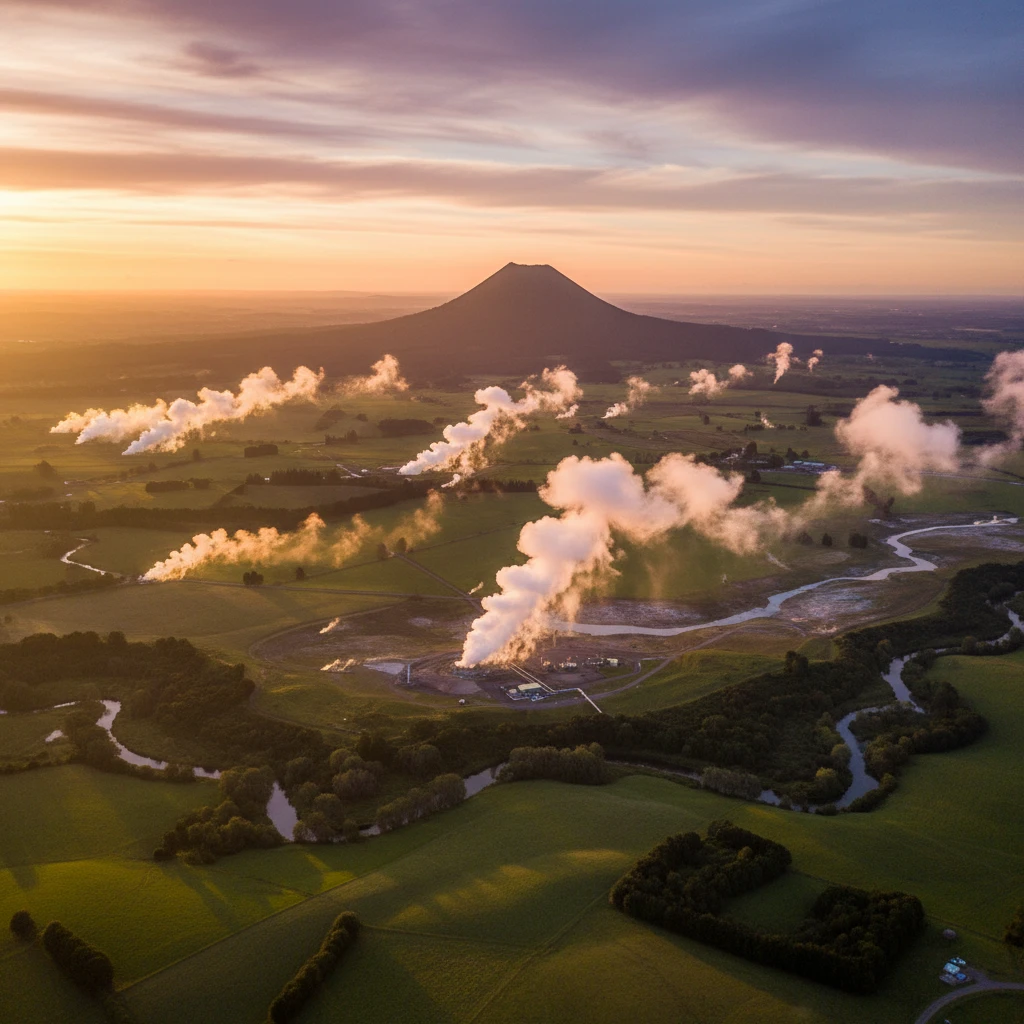
Unlike the vapour-dominated systems found in some parts of the world, Kawerau is a liquid-dominated system. This means that when the hot fluid is brought to the surface and the pressure drops, it “flashes” into a mixture of steam and hot water. This dual-phase output is what makes the field so versatile, allowing for both electricity generation (using steam) and direct heat applications (using the thermal energy).
How is steam used for industrial process heat?
Kawerau holds a prestigious title in the annals of renewable energy history: it is home to the world’s largest direct use of geothermal energy for industrial processes. While most geothermal fields solely generate electricity to feed into the grid, Kawerau’s steam is piped directly into massive industrial boilers and heat exchangers.
The Tasman Mill Legacy
Since the 1950s, the Tasman pulp and paper mill (now owned by Oji Fibre Solutions and Norske Skog) has utilized this geothermal steam for timber drying, pulp processing, and paper manufacturing. This was a pioneering move that drastically reduced the reliance on fossil fuels for industrial heating.
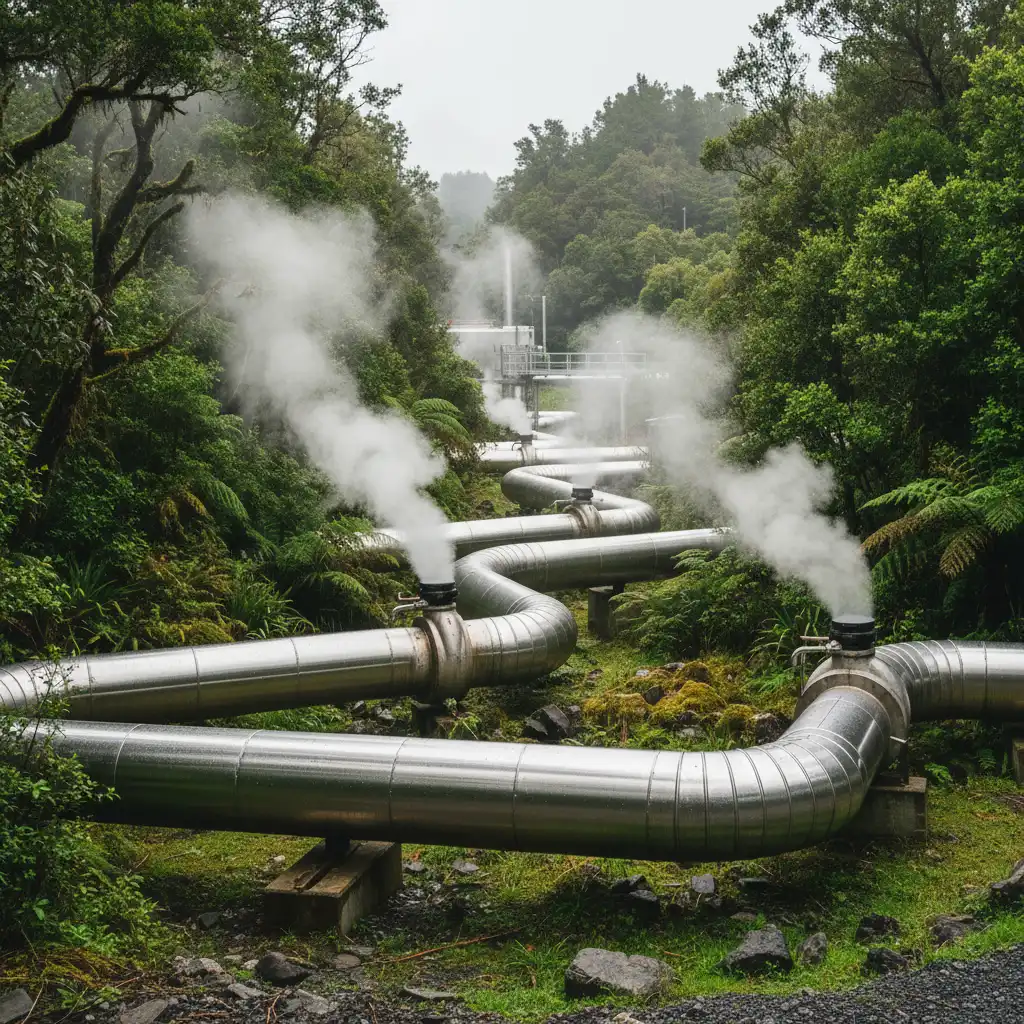
The process works by piping high-pressure steam from the separation plants directly to the mill. This “clean steam” is used to heat the massive rollers that dry paper and to maintain the specific temperatures required for chemical pulping. The condensate (cooled water) is then often reinjected back into the ground or treated, ensuring a sustainable cycle.
Which power stations operate in Kawerau?
Beyond direct heat, the field supports substantial electricity generation. Over the decades, capacity has expanded significantly, involving major players like Mercury NZ, Eastland Generation, and local Iwi trusts.
Kawerau Geothermal Power Station (KGL)
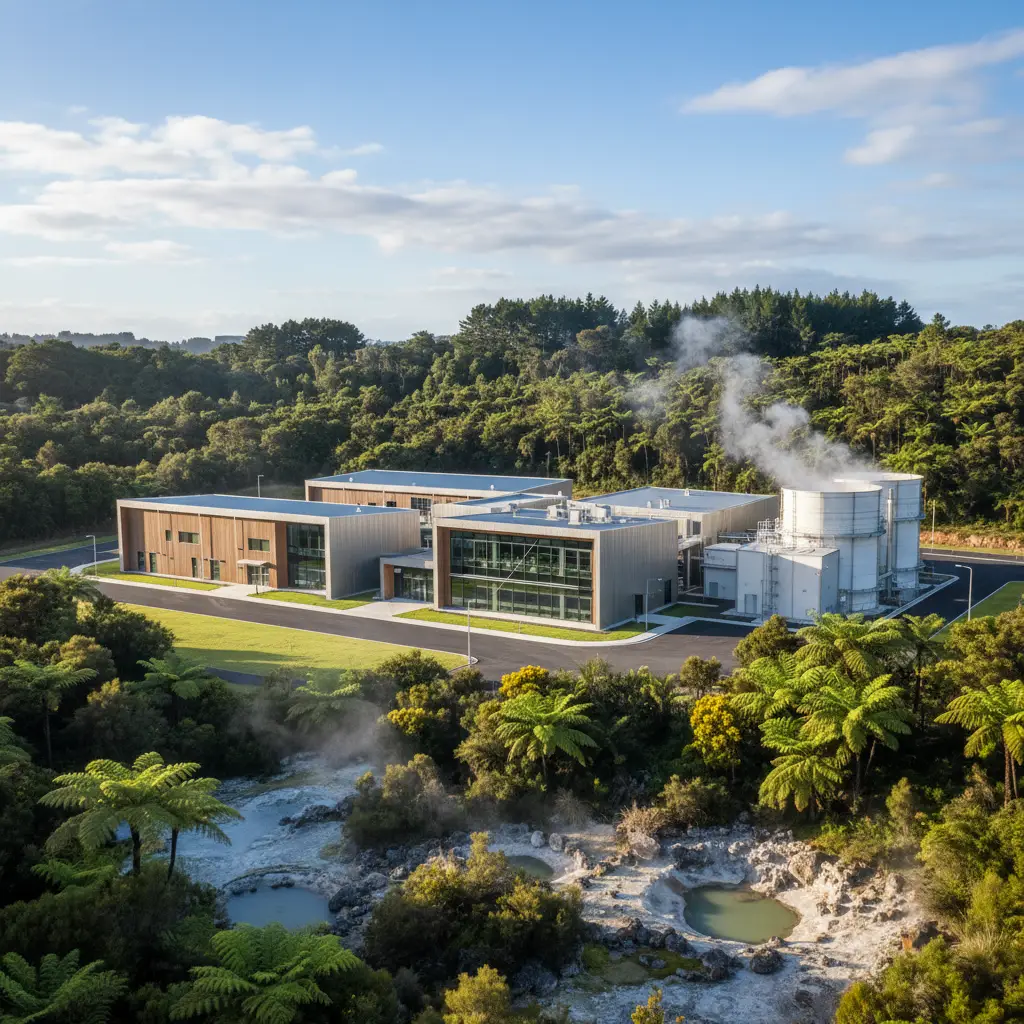
Commissioned in 2008, this 100 MW station, owned by Mercury, is a standout facility. It utilizes a flash steam system where the steam drives a turbine directly. It is famously reliable, providing baseload power that—unlike wind or solar—runs 24/7 regardless of the weather.
Te Ahi O Maui
A more recent addition, the Te Ahi O Maui plant represents a partnership between Eastland Generation and the Kawerau A8D Ahu Whenua Trust. This 25 MW plant is a binary cycle station. In a binary system, the geothermal fluid heats a secondary working fluid (like pentane) which has a lower boiling point. The vapour from this secondary fluid drives the turbine. This technology allows for the efficient use of lower-temperature fluids and is zero-emission during normal operation as the geothermal fluid is 100% reinjected.
Geothermal Developments Ltd (GDL)
This smaller plant utilizes a binary cycle to generate approximately 9 MW of power, further demonstrating the scalability of geothermal technology from massive utility-scale plants to smaller, localized generators.
What are the environmental benefits of green energy?
The shift toward geothermal energy in Kawerau provides a blueprint for decarbonizing heavy industry. In a world grappling with climate change, the environmental dividends of this region are substantial.
- Baseload Renewability: Geothermal provides consistent power, stabilizing the national grid which relies heavily on hydro (susceptible to dry years) and wind (intermittent).
- Carbon Displacement: By using geothermal steam for heat, the local mills avoid burning hundreds of thousands of tonnes of coal or gas annually. This significantly lowers the carbon footprint of New Zealand’s timber exports.
- Sustainable Reinjection: Modern geothermal management involves reinjecting the cooled geothermal fluids back into the reservoir. This maintains pressure underground and prevents land subsidence, a lesson learned from older fields like Wairakei.
- Low Surface Footprint: Compared to solar farms or hydro dams that require vast tracts of land or flooded valleys, geothermal power plants have a relatively small physical footprint relative to their energy output.
Key Geothermal Power Kawerau Facts
For those researching the specifics of the region, here is a breakdown of the essential data points regarding the Kawerau field:
- Location: Bay of Plenty region, North Island, New Zealand.
- Heat Source: Taupō Volcanic Zone (TVZ).
- Reservoir Temperature: Typically between 260°C and 300°C.
- Primary Operator: Mercury, in conjunction with Ngāti Tūwharetoa (Bay of Plenty) Settlement Trust and other land trusts.
- Total Installed Capacity: Approximately 160+ MW of electrical generation, plus immense direct heat capacity.
- Historical Milestone: First industrial use of geothermal steam in the world (1950s).
- Indigenous Partnership: The field is a leading example of Iwi involvement in resource management, providing revenue and employment for local Māori communities.
Visual Guide: Seeing the Steam
While you cannot walk through the heavy industrial zones of the power plants or the paper mill for safety reasons, the geothermal activity of Kawerau is impossible to miss. It shapes the lifestyle and the landscape of the town.
Mount Putauaki (Mt Edgecumbe)
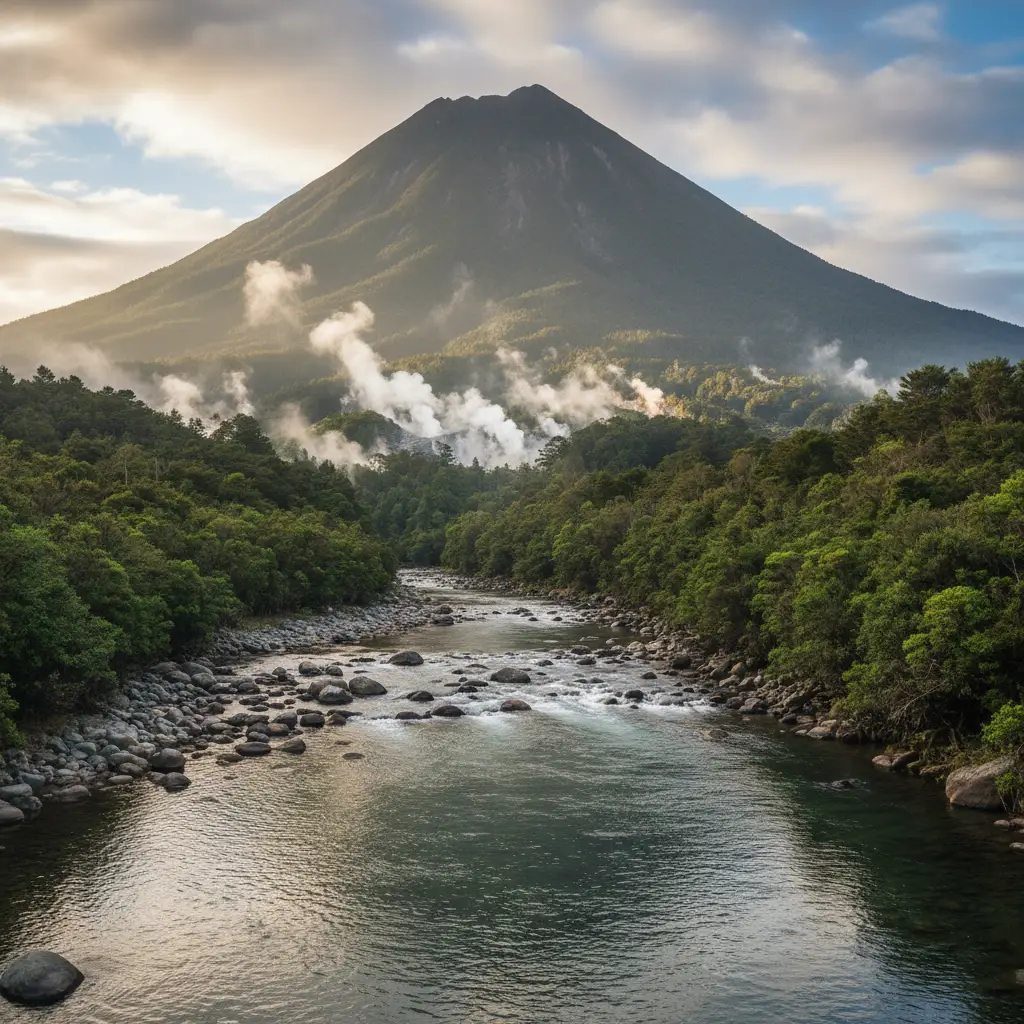
The dormant volcanic cone of Putauaki looms over the town. Hiking the mountain (permits required from Māori Investments Ltd) offers a panoramic view of the entire geothermal system. From the summit, you can see the network of steam pipes snaking through the valley—the “veins” of the town.
Borefields and Steam Vents
As you drive along State Highway 34 entering Kawerau, you will pass active wellheads. These are often fenced off, but the sheer noise of a venting bore and the billowing clouds of steam are a visceral reminder of the power beneath your feet. It creates a moody, atmospheric aesthetic that is unique to this part of New Zealand.
Tarawera River
The river flows past the industrial site. While the river itself is not geothermal, the juxtaposition of the cool rushing water against the backdrop of industrial steam creates striking photographic opportunities, particularly in the crisp winter mornings when the steam appears thicker.
The Future of Kawerau’s Energy
The evolution of the Kawerau geothermal field is far from over. Future developments look toward extracting even more value from the brine. This includes the potential extraction of minerals like lithium or silica from the geothermal fluid before it is reinjected. Furthermore, investigations into “supercritical” geothermal fluids (fluids at extreme pressures and temperatures deeper in the crust) could potentially multiply the energy output significantly.
Kawerau remains a testament to how a small regional town can play a massive role in a nation’s energy strategy. By leveraging the natural heat of the earth, the town supports jobs, sustains industry, and keeps the lights on across New Zealand.
People Also Ask
Is Kawerau geothermal energy renewable?
Yes, Kawerau geothermal energy is renewable. The heat from the earth is virtually limitless on human timescales, and modern management techniques involving fluid reinjection ensure the reservoir pressure is maintained for sustainable long-term operation.
Can you visit the Kawerau power station?
Generally, the Kawerau geothermal power stations are not open to the public for casual tours due to strict health and safety regulations associated with high-pressure steam and electricity generation. However, the steam plumes are clearly visible from public roads and lookouts around the town.
How much power does Kawerau generate?
The Kawerau geothermal field supports over 160 MW of electrical generation capacity across multiple stations (Mercury, Te Ahi O Maui, GDL). Additionally, it provides a massive amount of thermal energy equivalent to hundreds of megawatts for industrial process heat.
Who owns the geothermal bores in Kawerau?
Ownership is a mix of commercial energy companies and local Iwi land trusts. Mercury is a major operator, but there are significant partnerships with Ngāti Tūwharetoa (Bay of Plenty) Settlement Trust and other Māori land entities who own the land and resources.
What is the difference between flash and binary geothermal plants?
Flash plants use high-temperature water that “flashes” into steam to drive a turbine directly. Binary plants use lower-temperature water to heat a secondary fluid with a lower boiling point; the vapour from this secondary fluid drives the turbine. Kawerau utilizes both technologies.
Why is Kawerau called the steam town?
Kawerau is called the “steam town” because of the visible geothermal activity surrounding the township. The numerous steam vents, boreheads, and industrial steam plumes are a defining feature of the local landscape and its economy.