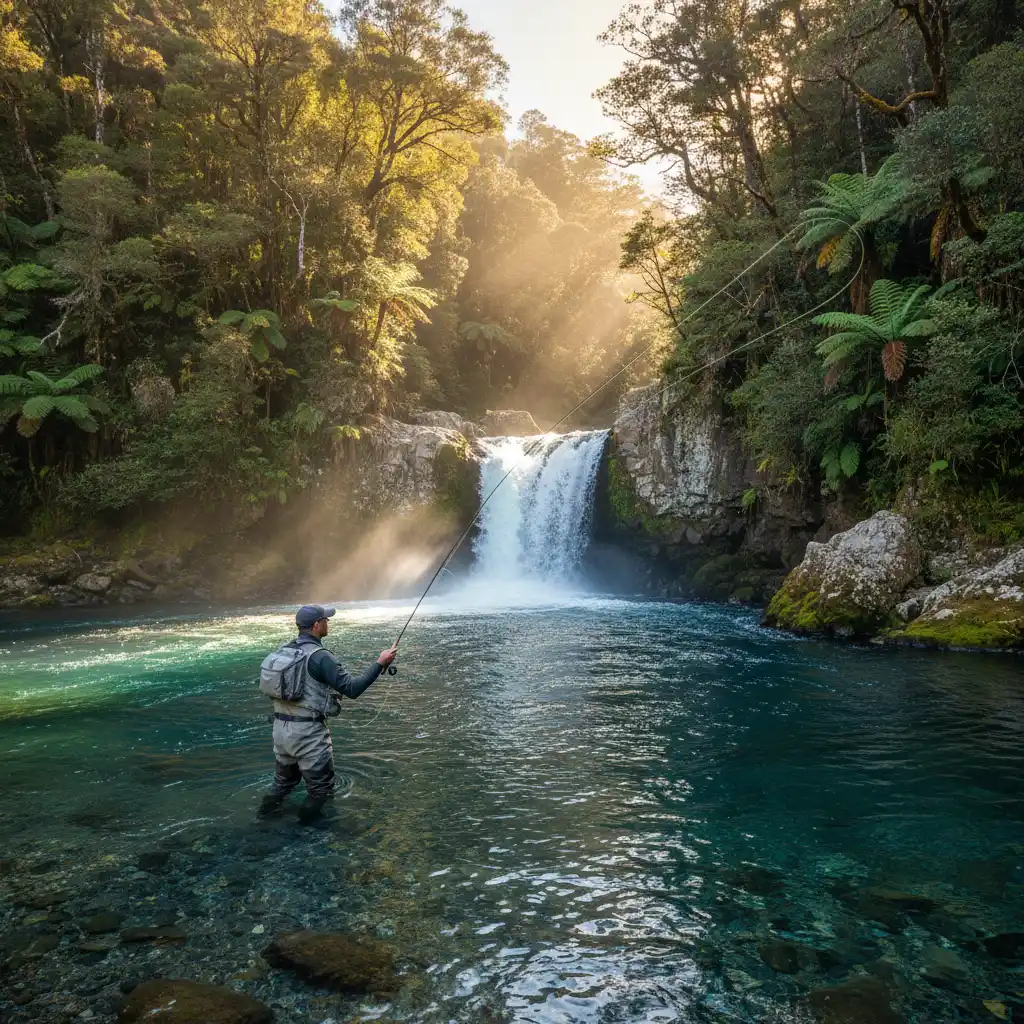
Fly fishing the Tarawera River offers anglers a world-class opportunity to target trophy Rainbow and Brown trout, particularly during the autumn and winter spawning runs. Located in New Zealand’s Bay of Plenty, this river system connects Lake Tarawera to the coast, providing diverse water types ranging from crystal-clear upstream pools to powerful lower currents ideal for nymphing and wet lining.
While the central plateau and Taupō often steal the international headlines, the Tarawera River remains one of the North Island’s most productive and accessible fisheries. For the domestic angler or the savvy tourist looking to escape the crowds, this river provides a perfect blend of technical sight fishing and heavy-water hauling. Whether you are targeting the massive spawning fish moving out of Lake Tarawera or exploring the pocket water near Kawerau, understanding the river’s distinct moods is the key to success.
The Tarawera River System: An Overview
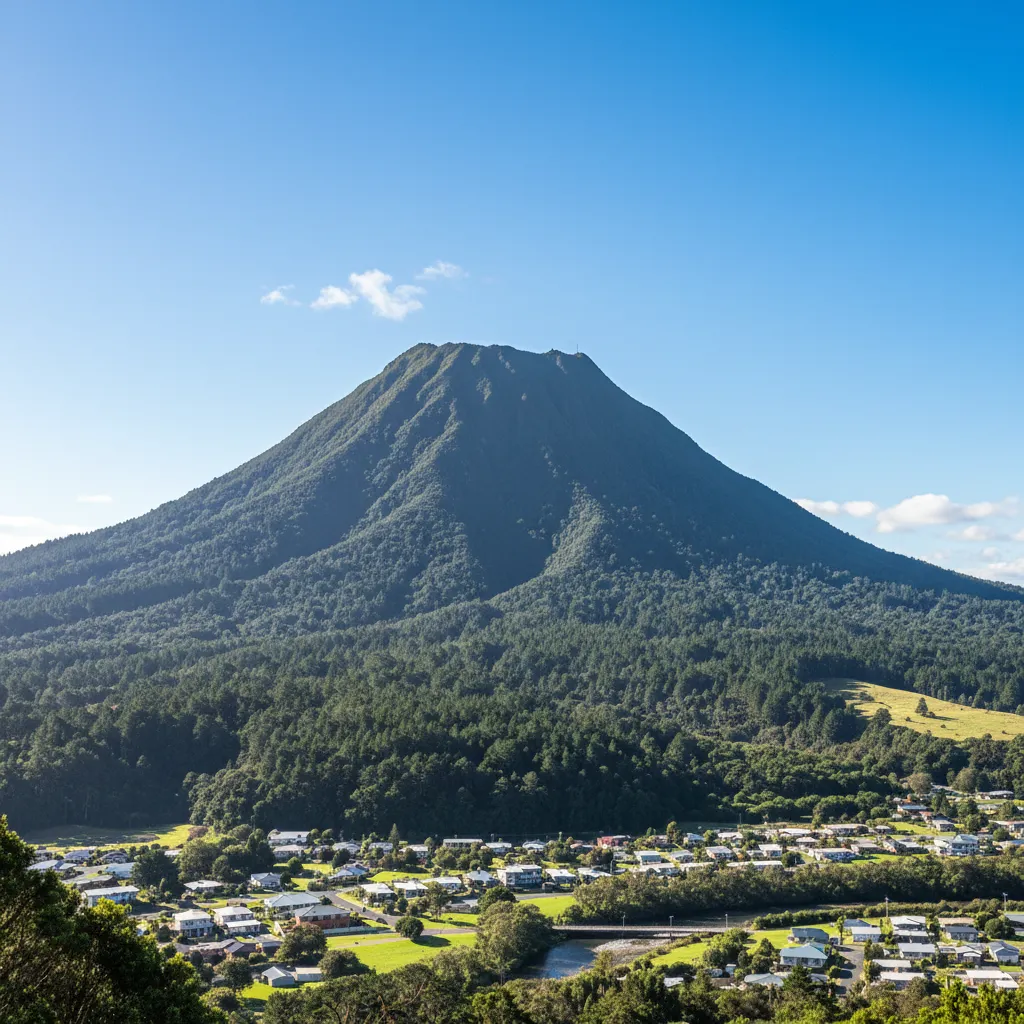
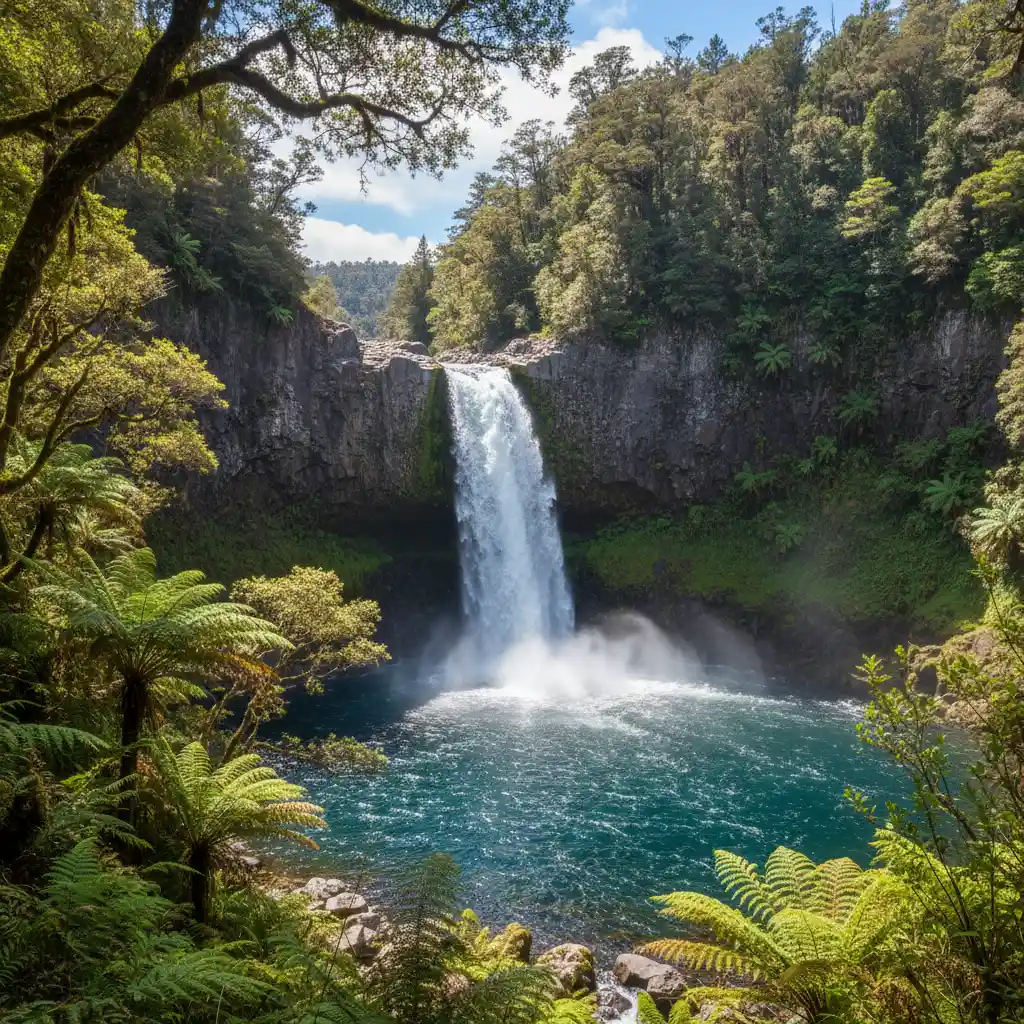
The Tarawera River is unique in its geothermal origins and its varied character as it flows from the volcanic plateau to the sea. Originating from the outlet of Lake Tarawera, the river begins its journey with crystal clear stability before plunging down the spectacular Tarawera Falls. Below the falls, the river changes character, winding through forestry and the town of Kawerau before entering the Rangitaiki Plains.
For the fly fisherman, the river is effectively divided into two distinct fisheries: the upper section above the falls (including the famous Outlet) and the lower river running through Kawerau. The water temperature is influenced by geothermal activity, which keeps the trout active year-round, although the peak activity aligns with the migratory runs.
Understanding the Spawning Runs (Autumn/Winter)
If your goal is to land a trophy fish weighing in excess of 4kg (10lbs), timing your visit around the spawning runs is critical. Unlike resident river fish, these trout spend most of their lives gorging on smelt in Lake Tarawera before migrating into the river to breed.
When do the trout run in the Tarawera?
The primary spawning runs typically begin in April and extend through to August. As the water temperatures in the lake drop and the daylight hours shorten, mature Rainbow trout begin to congregate at the Outlet and move into the upper reaches of the river. While Brown trout also run the river, they tend to move earlier, often starting in late summer or early autumn.
The “run” is often triggered by rain events or sharp drops in barometric pressure. Anglers monitoring weather patterns often find that the days immediately following a heavy rain see the highest number of fresh fish entering the system. These fish are silver, powerful, and in peak physical condition, offering a fight that rivals any steelhead fishery in the world.
Best Spots for Rainbow and Brown Trout
Knowing where to cast is half the battle on the Tarawera. The river offers varied terrain, and fish holding spots change depending on the season and water levels.
1. The Lake Tarawera Outlet
The Outlet is perhaps the most famous section of the river. Here, the water is gin-clear, allowing for exciting sight fishing. Anglers often stand on the banks or wade the shallow margins to target cruising fish. This area is technically part of the lake fishery in terms of access but flows like a river. It is highly pressured, so stealth and long leaders are essential. The “Magic Carpet”—a stretch of weed beds just downstream—is a prime lie for feeding trout.
2. Tarawera Falls Access
Access to the section immediately below the falls requires a permit to enter the forestry roads (usually available from the Kawerau i-SITE). This section is scenic and wild. The pools here are deep and oxygenated, providing excellent holding water for large fish resting after their migration. Nymphing deep pools is the most effective method here.
3. Kawerau Town Stretches
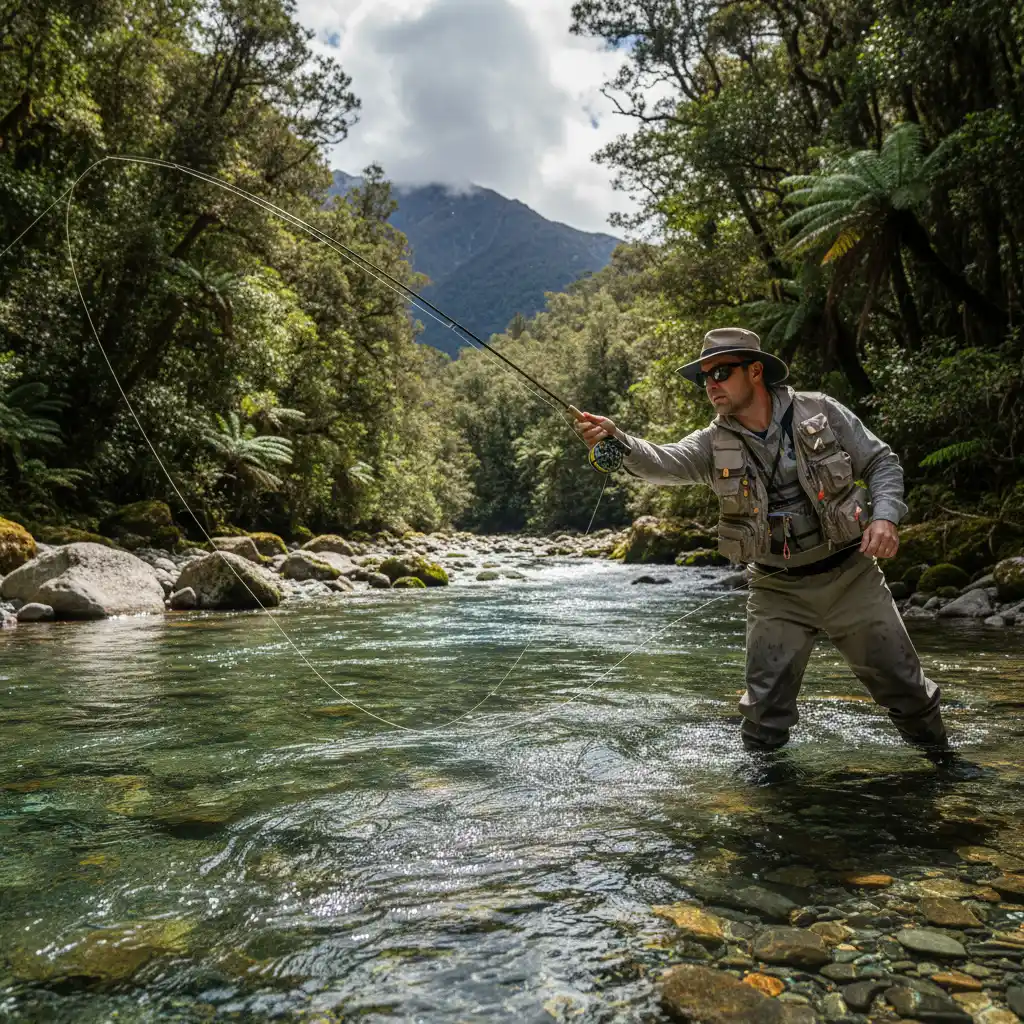
Often overlooked by international tourists, the stretches of river flowing through and near the town of Kawerau hold surprisingly large fish. The parks within the town offer easy access for anglers of limited mobility. During the winter runs, these lower sections act as a highway for fish moving upstream. Swinging wet flies or streamers through the current can result in aggressive strikes from fresh-run fish.
Essential Gear and Tactical Approaches
Fly fishing the Tarawera River requires robust gear. These are not delicate high-country stream trout; they are lake-fed monsters with the current on their side.
Rod and Reel Selection
A #6 or #7 weight rod is the standard for the Tarawera. You need enough backbone to turn a large fish in heavy current, but enough sensitivity to detect subtle nymph takes. A 9-foot rod is versatile enough for both nymphing and wet lining. Ensure your reel has a smooth drag system and is loaded with plenty of backing—these fish will run.
Terminal Tackle and Flies
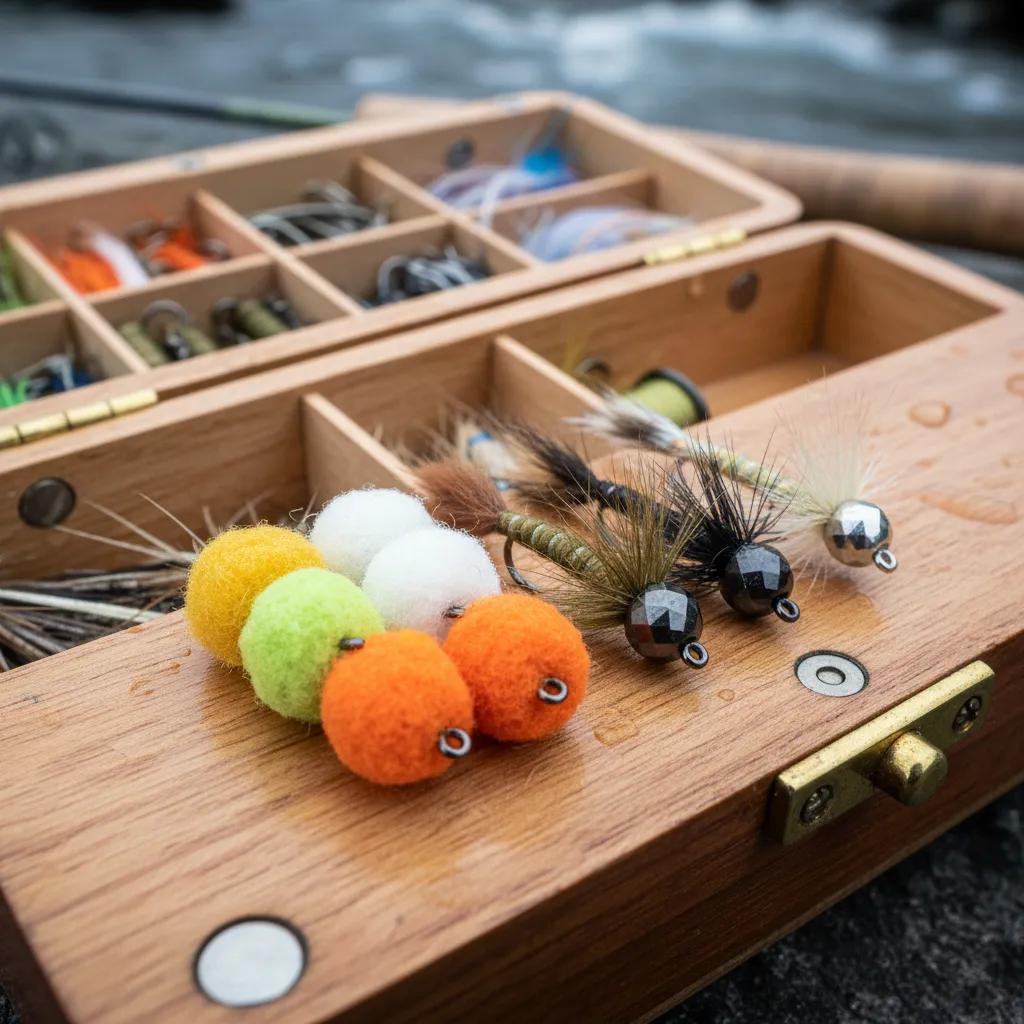
- Nymphing: This is the most productive method during the spawning run. Use a heavy point fly to get down quickly in the fast water. Tungsten bead heads are a must. Popular patterns include Hare and Coppers, Pheasant Tails, and massive Globugs (egg patterns) in orange or champagne colors during peak spawning.
- Wet Lining: In the lower reaches or during low light conditions, swinging streamers is effective. Woolly Buggers in olive or black, and Rabbit patterns work well to trigger aggressive territorial strikes.
- Leader: Do not go too light. Use 8lb to 10lb fluorocarbon. The water can be clear, but the fish are not leader-shy when they are aggressive, and the rocky riverbed will shred light tippets instantly.
Fishing Regulations and License Requirements
New Zealand’s freshwater fisheries are managed by Fish & Game NZ. The Tarawera River falls under the Eastern Region jurisdiction. Strict adherence to these rules is mandatory to protect the fishery and avoid hefty fines.
License Requirements
You must hold a valid Fish & Game Sports Fishing License. There are several categories:
- Whole Season License: Best value for residents or long-term visitors.
- Non-Resident License: Required for international anglers.
- Day Licenses: Available for short trips.
Specific River Rules
Regulations can change annually, so always check the current regulation book. However, generally:
- Season: Many parts of the Tarawera are open year-round, but specific upper reaches may close during peak spawning to protect redds (nests). The Outlet usually has specific opening dates (often opening Oct 1st), while the river below the falls is often open all year.
- Methods: Fly fishing is the primary permitted method in the upper reaches. Spin fishing is permitted in designated lower sections.
- Bag Limits: There is typically a daily bag limit (often 2 fish), and size limits apply. However, catch and release is strongly encouraged to sustain the population of trophy fish.
Budget-Friendly Alternatives to Taupō
The Tarawera region offers a compelling financial alternative to the more commercialized Taupō fishery. While Taupō guides can cost upwards of $1,000 NZD per day, the Tarawera provides a DIY-friendly experience for the competent angler.
Accommodation and Logistics
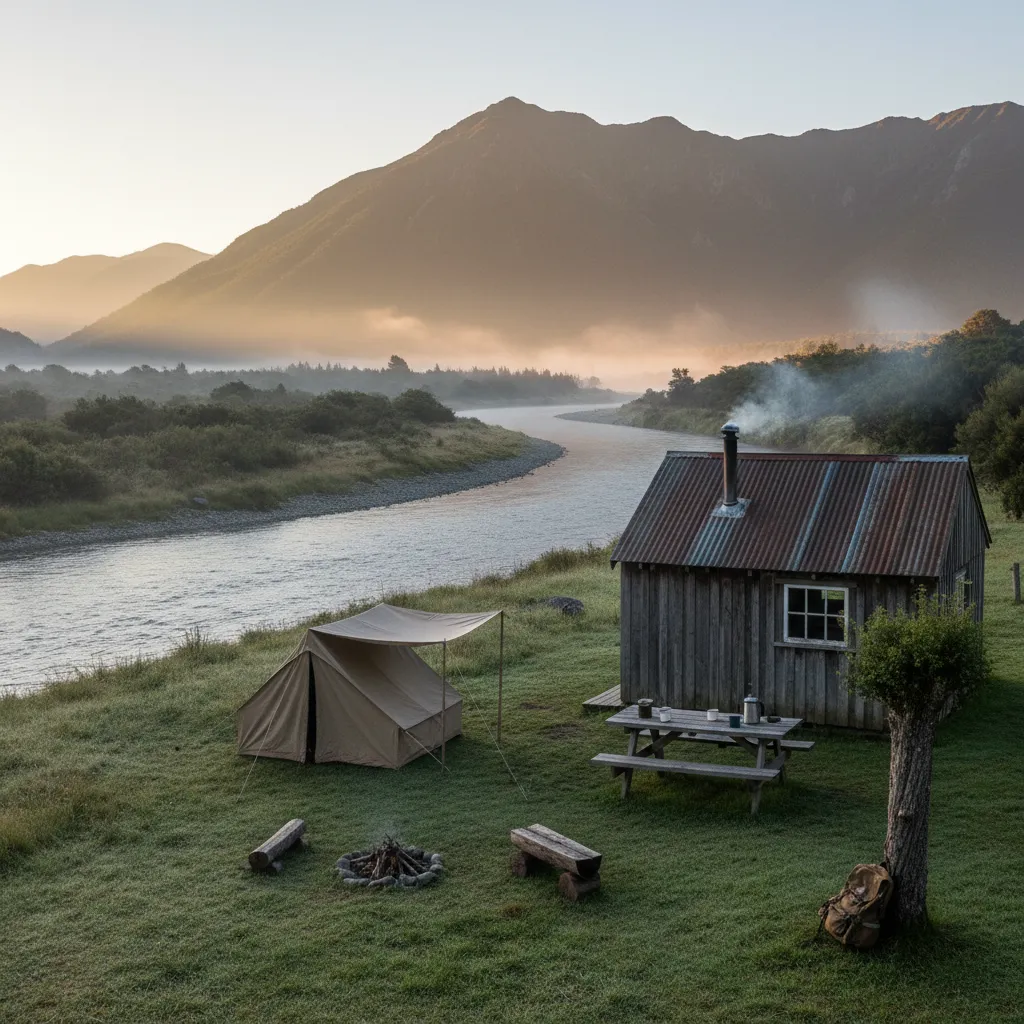
Basing yourself in Kawerau or nearby Whakatāne is significantly cheaper than Tūrangi or Taupō. Kawerau offers freedom camping spots for self-contained vehicles and affordable motels. The town was built to service the mill, so it lacks the “tourist trap” pricing of other hubs.
DIY vs. Guiding
Because the river is relatively accessible via forestry roads and public parks, a guide is not strictly necessary for success if you can read water. The access points are well-marked, and the techniques (nymphing deep runs) are standard for New Zealand winter fishing. However, hiring a local guide for just one day can fast-track your learning of the specific river access points, which can be tricky due to forestry gates.
Other Nearby Options
If the Tarawera is blown out by rain, you are centrally located to pivot to other fisheries. The Rangitaiki River is a short drive away, and the lakes of the Rotorua district (Rotoiti, Okataina) are within 45 minutes. This central location reduces the risk of a ruined trip due to localized weather events.
People Also Ask
What is the best time of year to fish the Tarawera River?
The best time for trophy fish is during the autumn and winter spawning runs (April to August). However, the river holds resident fish year-round, and summer evenings can provide excellent dry fly fishing.
Do I need a special license for the Tarawera River?
You need a standard Fish & Game Eastern Region license. Unlike the Taupō region, which requires a separate Department of Conservation license, the Tarawera is covered under the national Fish & Game system.
Can you spin fish the Tarawera River?
Spin fishing is permitted in the lower sections of the river (check the regulation map for the exact boundary, usually below the falls). The upper reaches and the Outlet are typically fly-fishing only.
How big are the trout in the Tarawera River?
During the spawning runs, the average size is impressive, often between 2kg and 3kg (4-6lbs). Trophy fish exceeding 4.5kg (10lbs) are caught every season, particularly in the pools below the falls.
Is the Tarawera River safe for wading?
Parts of the river are safe, but caution is required. The river bed can be rocky and slippery. Below the falls, the current is powerful. Always use a wading staff and wear a wading belt. The water level can fluctuate due to generation or rainfall.
What is the ‘Magic Carpet’ on the Tarawera?
The ‘Magic Carpet’ refers to a specific stretch of weed beds located just downstream from the Lake Tarawera Outlet. It is a famous holding spot for trout feeding on nymphs and drifting food, offering prime sight-fishing opportunities.