
The Kawerau industrial economy is a specialized, high-value manufacturing hub anchored by the forestry and wood processing sectors. Driven by the world’s largest plantation forest and powered by sustainable geothermal energy, Kawerau serves as the industrial engine of the Bay of Plenty, contributing significantly to New Zealand’s GDP through pulp, paper, and timber exports.
Kawerau: The Industrial Engine of the Bay
Kawerau is not merely a rural township; it is a purpose-built industrial powerhouse that plays a disproportionately large role in the economic framework of the Bay of Plenty and New Zealand as a whole. Established in the 1950s specifically to service the Tasman Pulp and Paper Mill, the town’s existence is inextricably linked to heavy industry. Today, the Kawerau industrial economy has evolved from a single-company town into a diverse cluster of manufacturing excellence, leveraging its unique geographical advantages.
The town sits at the intersection of two critical natural resources: the Kaingaroa Forest and the Taupo Volcanic Zone. The former provides the raw material—millions of tonnes of Pinus radiata—while the latter provides the energy—high-enthalpy geothermal steam. This convergence allows Kawerau to operate with a level of energy efficiency and cost-effectiveness that is difficult to replicate elsewhere in the world. As global markets increasingly demand low-carbon manufacturing, Kawerau’s reliance on renewable baseload energy positions it as a forward-thinking industrial leader.
The Forestry Supply Chain Explained
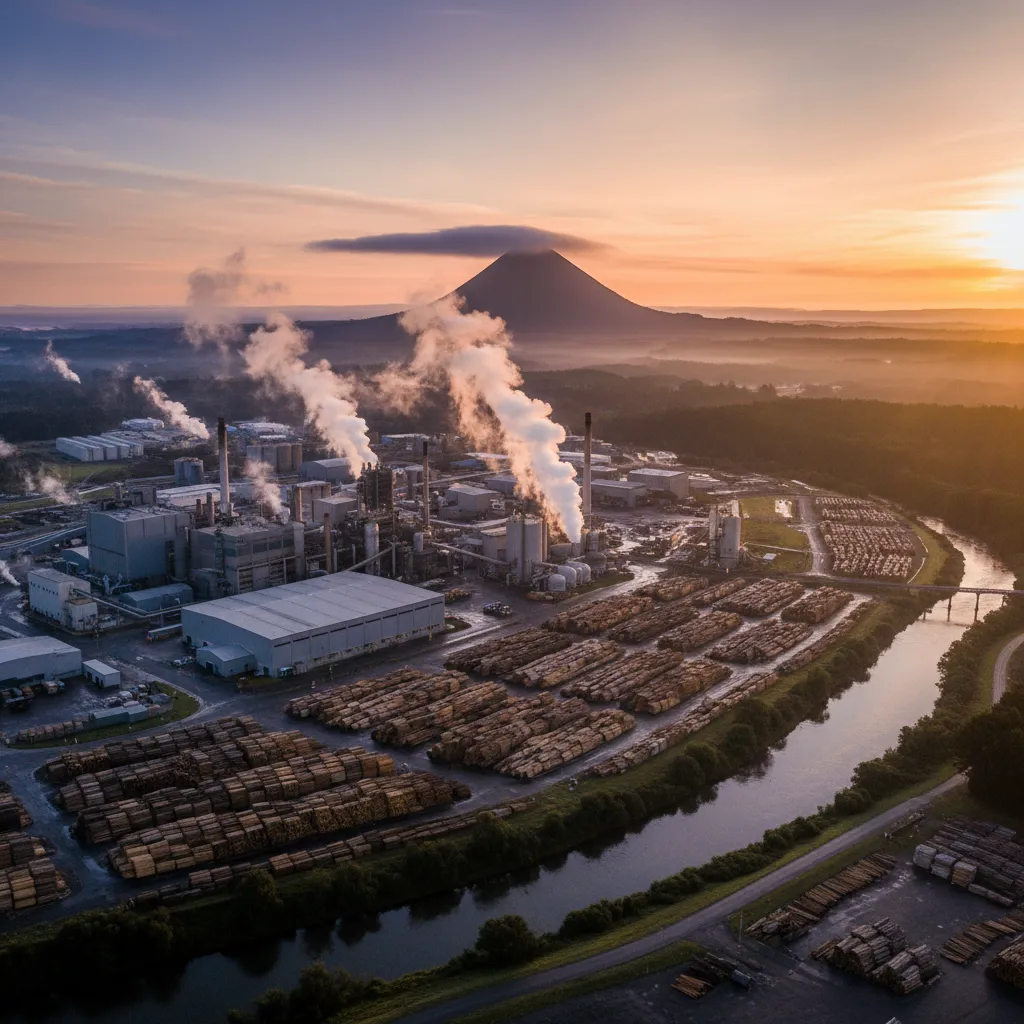
To understand the local economy, one must understand the journey of the wood fibre. The forestry supply chain in this region is a sophisticated logistical ballet that involves silviculture, harvesting, transport, processing, and export. Kawerau acts as the central processing node for the Kaingaroa Forest, which covers approximately 2,900 square kilometres.
From Harvest to Processing
The cycle begins in the forest, where trees reach maturity after roughly 25 to 28 years. Once harvested, the logs are graded and sorted. While some raw logs are sent directly to the Port of Tauranga for export, the highest economic value is generated when this fibre is processed domestically in Kawerau. The industrial zone processes diverse grades of timber:
- Pruned Logs: High-quality wood used for clear timber, furniture, and joinery.
- Structural Logs: Used for framing and construction lumber.
- Pulp Logs: Lower grade wood or offcuts used to create pulp, paper, and cardboard products.
Value-Added Manufacturing
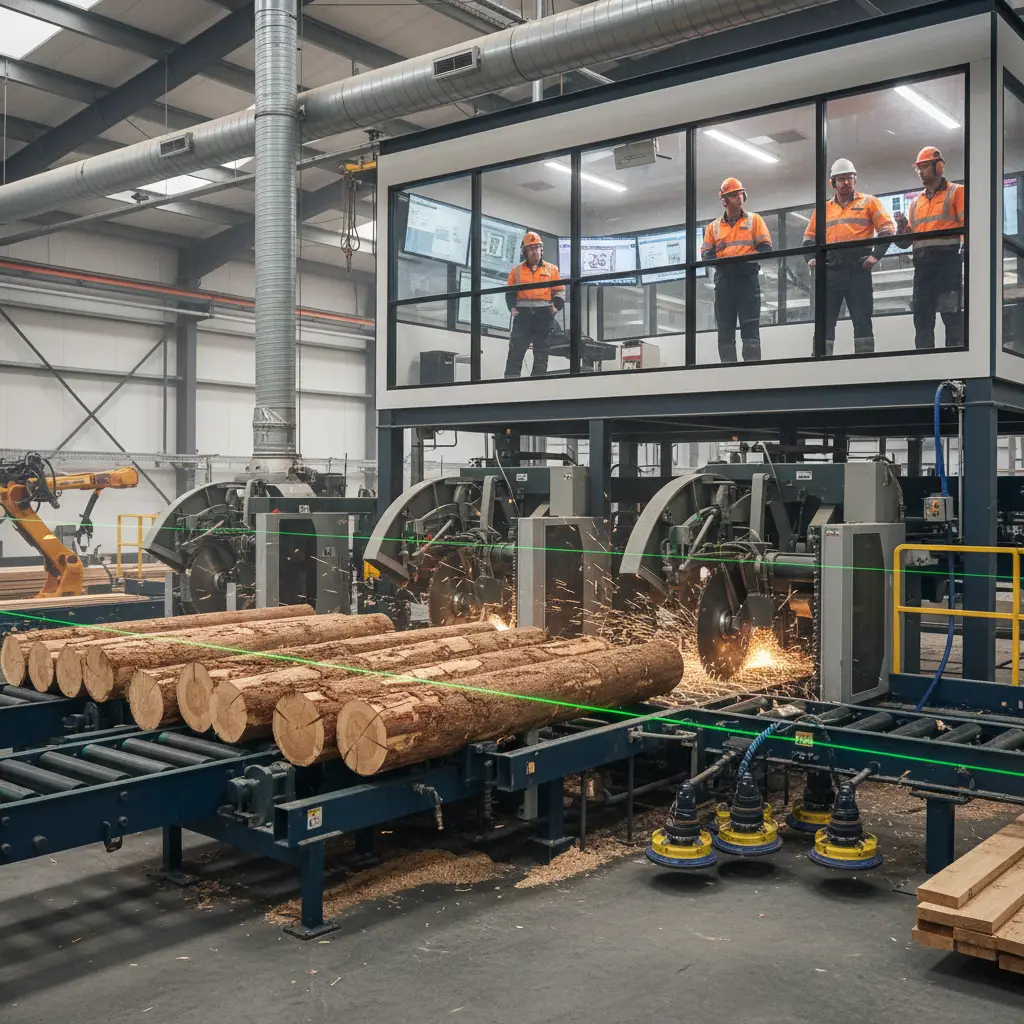
The processing phase is where the Kawerau industrial economy shines. Sawmills cut logs into dimensional lumber, which is then kiln-dried using geothermal heat. Wood chips and residues, often considered waste in other jurisdictions, are utilized here as feedstock for pulp mills or as biomass fuel. This high level of utilization ensures that almost every part of the tree contributes to the local revenue stream, minimizing waste and maximizing yield per hectare of forest harvested.
Major Employers and Economic Contributors
The economic landscape of Kawerau is defined by several multinational and large domestic corporations. These entities provide stable employment, drive technological upskilling, and support a vast network of contractors and service providers.
Oji Fibre Solutions
A giant in the industry, Oji Fibre Solutions operates the Tasman Mill. This facility is a cornerstone of the local economy, producing high-quality unbleached kraft pulp. This pulp is a critical component in the global manufacture of cardboard boxes and packaging materials. The mill’s operation requires a massive workforce, ranging from chemical engineers to maintenance fitters, and it injects millions of dollars annually into the local community through wages and procurement.
Essity
Essity is a leading global hygiene and health company. In Kawerau, their facility is the only tissue manufacturing plant in New Zealand. They produce well-known brands such as Purex and Sorbent. Essity’s presence highlights the region’s capability to support Fast-Moving Consumer Goods (FMCG) manufacturing, moving beyond primary processing into retail-ready products.
Sequal Lumber
Sequal represents the modern face of the timber industry. They have moved away from the commodity volume model to a “mass customization” approach, cutting lumber to order for specific clients around the world. Their agile business model and heavy investment in technology demonstrate how the Kawerau industrial economy is adapting to changing global market needs.

Innovation in Wood Processing and Energy
What sets Kawerau apart from other forestry towns globally is the direct integration of geothermal energy. The Kawerau Geothermal Field is one of New Zealand’s most reliable energy sources. Unlike wind or solar, which are intermittent, geothermal provides consistent baseload power and, crucially for industry, process heat.
Geothermal Process Heat
In traditional manufacturing, generating steam for drying timber or cooking pulp requires burning fossil fuels like coal or gas. In Kawerau, industries tap directly into the geothermal field. Steam is separated from the geothermal fluid and piped directly into heat exchangers, kilns, and digesters. This not only significantly reduces operating costs—insulating local businesses from volatile global oil prices—but also drastically lowers the carbon footprint of the products produced.
Clean Energy Generation
Beyond direct heat use, the region is a net exporter of electricity. Geothermal power stations, such as those operated by Mercury and Eastland Generation, feed electricity into the national grid. This abundance of local power ensures that the industrial zone has high energy security, a critical factor for heavy industry planning long-term investments.
Infrastructure and Logistics Connectivity
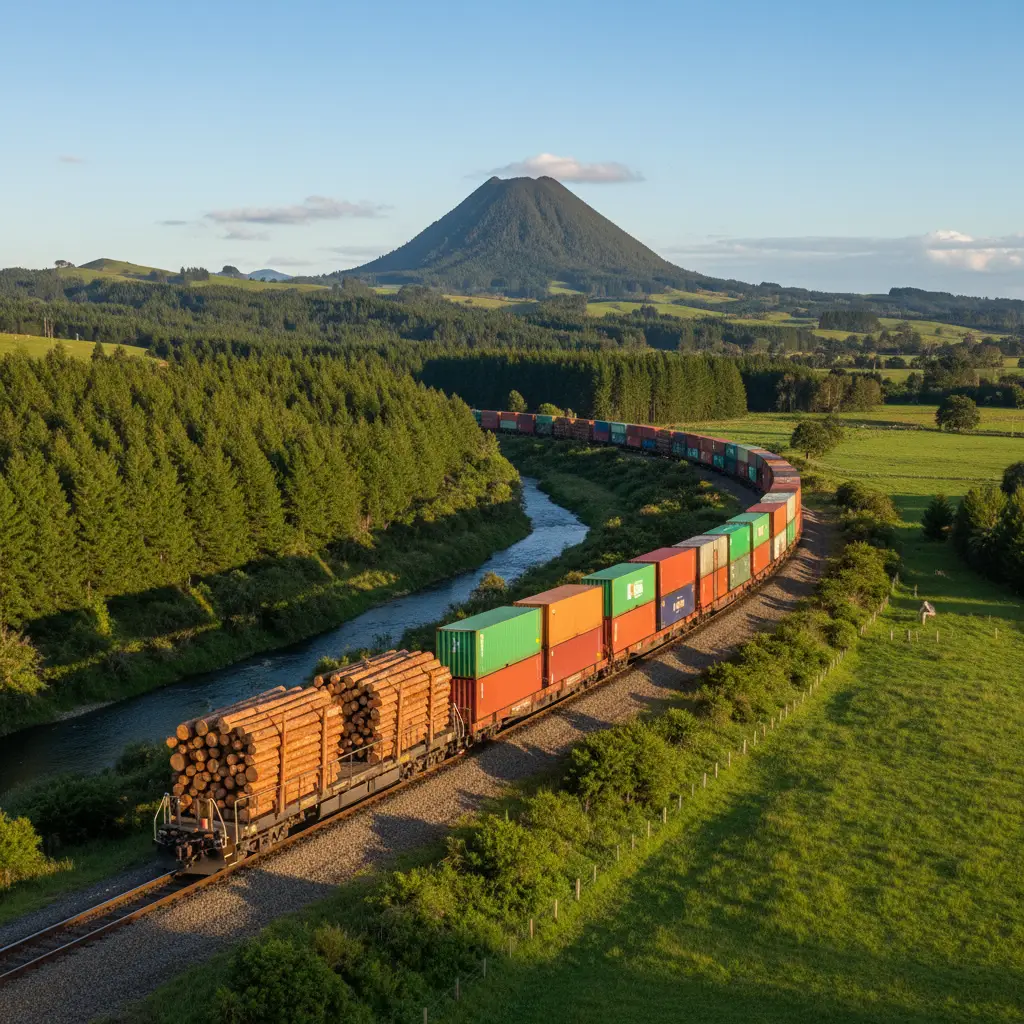
An industrial hub is only as effective as its connection to the world. Kawerau benefits from a dedicated rail link to the Port of Tauranga, New Zealand’s largest and most efficient export port. This rail connection is vital for moving high volumes of heavy pulp and timber products off the roads and directly to the quayside.
The establishment of the Kawerau Container Terminal (KCT) has further revolutionized local logistics. By allowing businesses to pack containers on-site in Kawerau and rail them directly to the port, the supply chain becomes leaner and more cost-effective. This infrastructure development reduces the carbon footprint of transport and alleviates congestion on the region’s highways.
The Industrial Symbiosis Model
Perhaps the most innovative aspect of the Kawerau industrial economy is the concept of “Industrial Symbiosis.” This economic model is facilitated by the group known as Industrial Symbiosis Kawerau (ISK). The core philosophy is that the waste or by-product of one process should become the fuel or raw material for another.
For example, bark stripped from logs at the sawmill isn’t discarded; it is burned to generate steam or electricity. Geothermal fluid used for electricity generation can be used again for lower-heat timber drying processes before being reinjected into the ground. This circular economy approach maximizes resource efficiency, reduces waste disposal costs, and creates a tightly knit industrial ecosystem where companies rely on and support one another.
Future Economic Outlook
The future of Kawerau’s economy looks robust, driven by global trends favoring sustainability. As the world moves away from plastic packaging, the demand for fibre-based, renewable packaging solutions (like those produced by Oji) is projected to soar. Furthermore, the construction industry’s shift toward engineered wood products as a low-carbon alternative to steel and concrete places Kawerau’s timber processors in a prime position for growth.
New developments are also on the horizon, including potential bio-energy hubs and further expansion of the container terminal. With the Putauaki Trust opening up new industrial zoned land, the capacity for inward investment is significant. Kawerau is transitioning from a historic mill town into a modern, sustainable bio-economy hub, setting a blueprint for regional economic development in New Zealand.
What is the main industry in Kawerau?
The main industry in Kawerau is forestry and wood processing. This includes the production of wood pulp, paper, tissue products, and sawn timber, all supported by the surrounding Kaingaroa Forest.
Why is Kawerau considered an industrial hub?
Kawerau is considered an industrial hub due to its high concentration of heavy manufacturing facilities, access to geothermal energy for industrial process heat, and direct rail links to the Port of Tauranga.
Who are the biggest employers in Kawerau?
The biggest employers include Oji Fibre Solutions (pulp and paper), Essity (tissue manufacturing), and Sequal Lumber. Collectively, these companies employ hundreds of locals and contractors.
How does geothermal energy power the Kawerau economy?
Geothermal energy provides low-cost, sustainable process heat (steam) for drying timber and processing pulp. It also generates electricity for the grid, reducing operational costs and carbon footprints for local industries.
What is Industrial Symbiosis Kawerau (ISK)?
Industrial Symbiosis Kawerau (ISK) is a partnership of local businesses and iwi working together to create a circular economy where waste from one industry is used as a resource or energy source for another.
Is the economy of Kawerau growing?
Yes, the economy is growing through diversification into container logistics, specialized timber manufacturing, and increased investment in sustainable bio-products, supported by the release of new industrial land by local trusts.